
/ 5.0
HVRL Lab Evaluation Score
•
Evaluated by Julian Vance
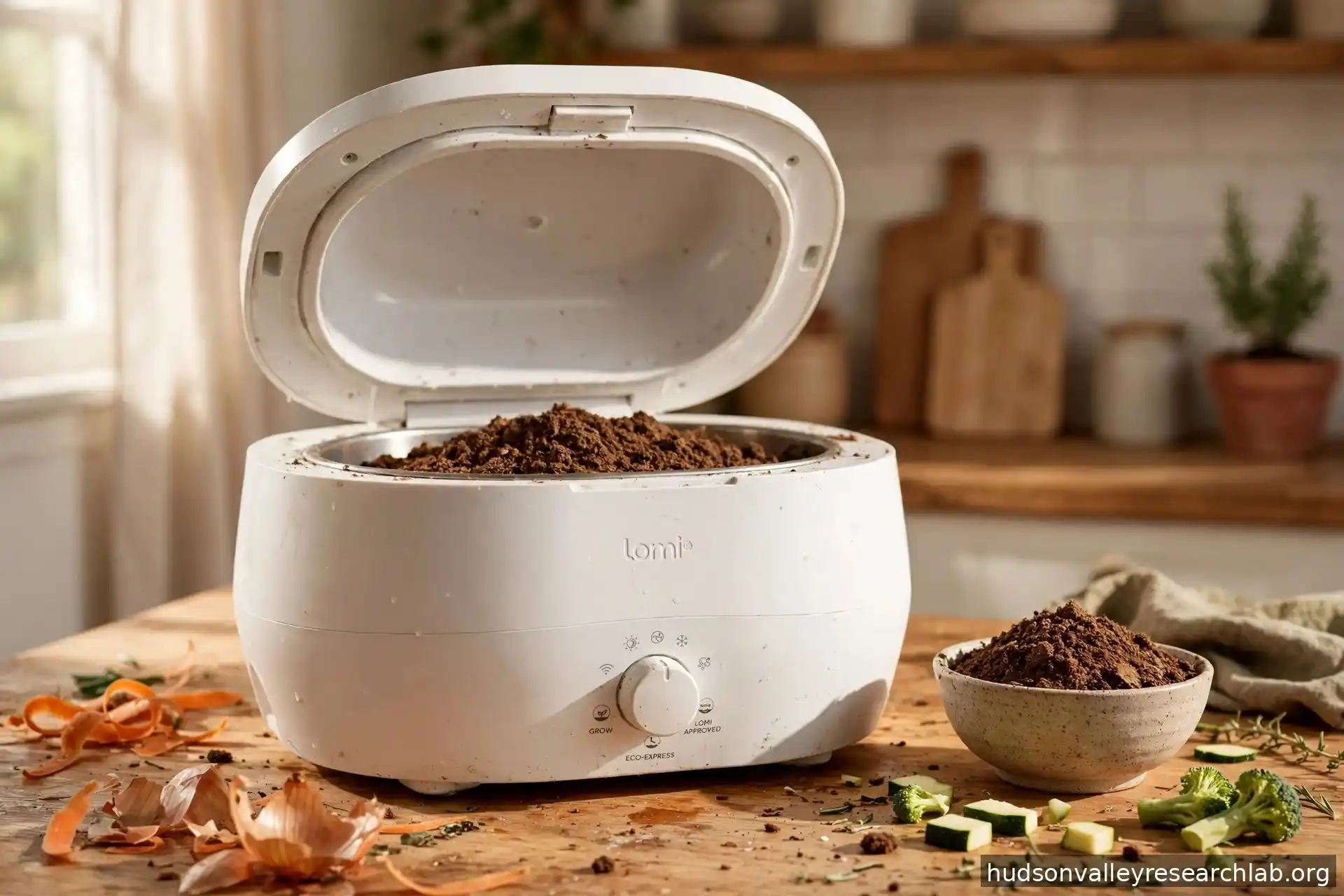
After six weeks of putting vegetable peels, leftover rice, and coffee grounds into the Lomi Bloom on my apartment kitchen counter, my answer is clear: this machine helps keep food waste from taking over a shared kitchen with unpleasant smells, but it doesn’t create magical, ready-to-use compost the way some buyers might expect.
The Lomi Bloom makes everyday food waste easier to manage. Its enclosed processing chamber, dual activated carbon filters, and three operating modes reduce the amount of waste I have to deal with. But real ownership also means cleaning sticky residue, replacing filter carbon, watching what goes into the bucket, and figuring out what to do with the finished Lomi Earth.
The biggest lesson from those six weeks is that reducing food waste and making finished compost are two different things. Lomi Bloom is useful for the first. The second still requires some work.
Lomi Bloom Quick Verdict
The Lomi Bloom is a convenient electric food waste processor for apartment kitchens and households without an outdoor composting setup. It reduces the volume of kitchen scraps and helps contain the odors associated with food waste.
However, the processed material isn’t automatically mature compost. Lomi Earth still needs to be handled and mixed with soil appropriately before being used around plants.
What I like:
- The enclosed processing chamber helps keep food waste contained.
- Dual activated carbon filters help control kitchen odors.
- The transparent Skylight lid makes it possible to watch the material during a cycle.
- Three modes cover everyday food scraps, compatible compostable products, and Grow Mode.
- The removable bucket makes emptying and cleaning easier.
- Wi-Fi and app connectivity provide cycle information and maintenance reminders.
What needs attention:
- Sticky, high-sugar scraps can leave stubborn residue on the bucket.
- Activated carbon needs regular replacement.
- Grow Mode takes considerably longer than Eco-Express under standard settings.
- Electricity consumption adds to the running cost.
- Lomi Earth isn’t finished compost straight out of the machine.
- The machine still needs cleaning and careful loading.
My verdict: Lomi Bloom makes a shared apartment kitchen easier to manage by reducing food waste volume and containing odors. But it isn’t a maintenance-free composting machine, and the output requires realistic expectations.
Lomi Bloom Specifications: What Are You Actually Getting?
The Lomi Bloom combines a removable processing bucket, heating system, ventilation, odor filtration, and smart controls.
Here are the main specifications to consider.
| Specification | Lomi Bloom |
|---|
Skylight Lid: A Useful Upgrade for Everyday Monitoring
The transparent Skylight lid is one of the most noticeable design features.
I can watch the material inside the bucket without lifting the lid, releasing heat, or allowing trapped odors to escape into the kitchen.
It also makes it easier to notice when scraps collect in one area instead of moving evenly around the chamber. As the cycle progresses, I can follow the changing appearance and volume of the material without interrupting the process.
That may sound like a small convenience, but it is useful when processing a mixed load of vegetable peels, fruit scraps, and leftover food.
Smart Temperature and Humidity Sensors
Lomi Bloom includes temperature and humidity sensors to monitor conditions inside the processing chamber.
This matters because different food scraps contain different amounts of moisture. A load of relatively dry vegetable scraps behaves differently from one containing wet fruit leftovers.
The sensors help the machine monitor those changing conditions during operation. They are part of the Bloom’s automated processing system, rather than a feature that eliminates the need to prepare food scraps properly.
Smart Cycles can also adjust eligible cycle runtimes based on the load and supported software. The actual time savings depend on the machine, firmware, and operating conditions.
Countertop Size, Weight, and Capacity
At 16 inches wide, 13 inches deep, and 12 inches tall, Lomi Bloom needs a reasonably permanent spot in the kitchen.
Its approximately 22-pound weight with the empty bucket and lid also makes it a substantial countertop appliance.
I recommend choosing its location before bringing it into the kitchen. Moving a nearly 10 kg appliance every time you want to use it takes away some of the convenience of having a dedicated food waste processor.
The bucket has a total capacity of approximately 3 quarts, or 2.8–3.0 liters. The recommended usable loading amount is closer to 2.5 liters.
The total physical capacity isn’t the same as the amount of food waste you should put into every cycle. Staying within the recommended fill level helps prevent material from interfering with the lid and processing mechanism.
How the Three Lomi Bloom Modes Compare
The three operating modes serve different purposes. Choosing the right one matters more than simply selecting the shortest cycle.
Eco-Express Mode: For Everyday Food Waste
Processing time: Approximately 3–5 hours
Eco-Express is designed to reduce food waste volume through heating and mechanical processing.
This is the mode for ordinary kitchen scraps when the main goal is reducing the amount of waste going into the trash.
Suitable materials depend on the manufacturer’s current input guidelines, but typical kitchen scraps include:
- Fruit and vegetable scraps.
- Coffee grounds.
- Suitable food leftovers.
- Other approved organic materials.
The main advantages are:
- Shorter processing time.
- No LomiPod requirement.
- Lower energy consumption than Grow Mode.
- Convenient operation for routine food waste management.
Energy consumption: Approximately 0.6–0.64 kWh per cycle.
The output is processed food waste, not automatically finished compost.
Lomi Approved Mode: For Compatible Compostable Products
Processing time: Approximately 5–8 hours
Lomi Approved Mode is designed for compatible compostable packaging and other qualifying materials.
The word approved is important. Not every item labeled biodegradable, compostable, or plant-based is compatible with Lomi Bloom.
The manufacturer’s compatibility requirements should determine what goes into this cycle.
The recommended proportion of non-food compostable material should not exceed 10% of the total load.
I wouldn’t experiment with unidentified PLA packaging, disposable cutlery, or random compostable containers. A product being compostable in an industrial facility doesn’t automatically mean it can be processed in a countertop appliance.
Energy consumption: Approximately 0.6–0.7 kWh per cycle.
Grow Mode: For Material Intended for Soil
Standard processing time: Approximately 16–20 hours
Grow Mode runs at a lower temperature for longer to help preserve beneficial microorganisms in the finished Lomi Earth. It is designed for food waste and uses a LomiPod with approximately 50 ml of water.
One detail worth understanding is that the actual runtime can vary. Lomi’s Smart Cycles technology uses the machine’s sensors and an updated algorithm to determine a shorter, more efficient runtime based on the amount and type of food scraps in the bucket.
A relatively dry, lighter load may finish sooner than a heavier, wetter batch. Lomi reports that Smart Cycles can make eligible cycles faster on average, although individual results vary. A shorter runtime around 12–14 hours may be possible under suitable conditions, but it isn’t a guaranteed finish time for every Grow cycle.
Smart Cycles availability depends on compatible hardware, internet connectivity, and supported firmware. Check the Lomi app to confirm that the feature is active on your machine.
Energy consumption: Approximately 0.93–1.0 kWh under the previously listed standard-cycle estimates. Actual consumption may vary with runtime and load.
Which Mode Should You Choose?
| Your main purpose | Recommended mode |
|---|
Does Lomi Bloom Actually Make Compost?
This is the biggest question buyers should ask before spending money on Lomi Bloom.
The machine is marketed as an electric composter, but its processing mechanism is different from traditional outdoor composting.
Traditional composting relies on microorganisms breaking down organic material over time. Depending on the conditions, that process can take weeks or months.
Lomi Bloom uses heat, mechanical mixing, and grinding to accelerate food waste reduction.
Its output is called Lomi Earth.
Reducing food scraps into smaller, drier particles doesn’t mean every part of biological decomposition has been completed.
What Is Lomi Earth?
Lomi Earth is the processed material produced by the machine.
Its appearance varies depending on the ingredients and selected processing mode. It may look like dark, dry, soil-like particles, but appearance alone doesn’t establish that the material is mature compost.
The recommended approach is to mix Lomi Earth with soil at approximately a 1:10 ratio before garden use.
That recommendation matters because concentrated processed food waste can behave differently once it becomes wet again.
Why Can Lomi Earth Develop Mold?
One source of confusion is what happens after processed material absorbs moisture.
Drying reduces moisture during processing. Once the material comes into contact with water and soil microorganisms, biological activity can resume.
Adding too much concentrated Lomi Earth to a small pot can create an unsuitable growing environment.
Possible problems include:
- White fungal growth.
- Unpleasant odors.
- Excessive moisture retention.
- Continued decomposition around plant roots.
- Poor growing conditions for young or sensitive plants.
A little white fungal growth isn’t automatically a sign of a machine defect. However, persistent foul odors and signs of plant stress should not be ignored.
Trench Composting: What Happens After You Bury Lomi Earth?
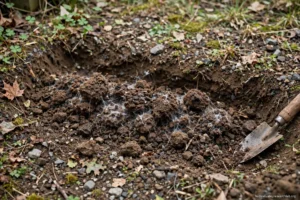
One practical way to handle suitable Lomi Earth is to bury it in garden soil rather than leaving a concentrated layer on the surface.
Dig a trench approximately 6–8 inches deep (15–20 cm), add the processed material, and cover it completely with soil. Keep the material away from direct contact with plant roots.
As the buried material absorbs moisture, soil microorganisms begin working on the remaining organic matter. Under suitable conditions, you may notice a thin white, thread-like fungal growth across parts of the material after several days. This can be saprophytic fungal mycelium, which helps break down organic residues.
A small amount of white, thread-like growth without an unpleasant smell is not automatically a sign that something has gone wrong. However, color alone cannot identify the organism or prove that the material is safe for plants.
Pay attention to the overall condition of the buried material. Persistent rotten odors, excessive waterlogging, or unusual colored growth accompanied by foul smells are reasons to check the moisture and drainage conditions.
The key is to keep the soil moist but not waterlogged and give the material enough time to break down. White fungal threads may appear after three to five days, but that is not a guaranteed timeline or a measure of complete decomposition.
For potted plants, continue following the approximately 1:10 Lomi Earth-to-soil mixing recommendation rather than applying concentrated material directly around roots.
Can Brown Cardboard or Paper Help?
Wet food scraps can become dense and sticky during processing. Carbon-rich materials such as clean, uncoated brown cardboard and plain paper can help absorb moisture and improve the texture of a traditional compost mixture.
For Lomi Bloom, check the approved-material list before adding cardboard or paper to Eco-Express or Grow Mode. Don’t assume that every type of paper or cardboard is suitable for every cycle.
When preparing Lomi Earth for garden use, mixing suitable brown materials into a separate composting stage is a more controlled way to balance wet, nitrogen-rich scraps with dry, carbon-rich material.
Lomi Bloom and Bioplastics: What Can Actually Go Inside?
The ability to process compostable packaging sounds convenient, but this feature comes with restrictions.
Lomi Approved Mode is intended for compatible non-food compostable products. The machine should not be treated as a universal plastic processor.
The 10% Rule
Non-food compostable materials should make up no more than approximately 10% of the total load, following the manufacturer’s instructions.
The remaining material should primarily consist of suitable food and plant waste.
I would follow this limit rather than trying to process a full container of compostable packaging in one cycle.
Why I Would Avoid Unknown PLA Products
PLA is commonly used in compostable packaging, cups, and disposable utensils.
However, the fact that a product contains PLA doesn’t automatically mean it is approved for Lomi processing.
There is a meaningful difference between a material being marketed as compostable and being specifically compatible with an appliance.
Using unsuitable materials can increase the risk of poor processing results and mechanical problems.
My rule is simple: if the manufacturer doesn’t identify the product as compatible, leave it out.
Odor Control: Do the Dual Carbon Filters Work?
Food waste appliances have one major weakness: they can become unpleasant when organic scraps sit in a warm, enclosed environment.
Lomi Bloom addresses this with two activated carbon filter compartments.
Activated carbon helps capture odors and gases generated during processing. In my apartment kitchen, containing food waste inside the machine is one of its most useful everyday benefits.
However, filtration isn’t a substitute for proper loading and regular maintenance.
The Filter Detail Many Owners Should Know
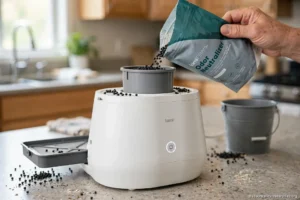
Lomi Bloom has two refillable filters: one at the back and another cylindrical filter near the bucket.
The cylindrical part is the filter housing. It doesn’t mean you should buy any random cylindrical carbon product and expect it to fit.
The machine uses activated carbon refills. I would use the refill material designed for Lomi rather than assuming fine aquarium carbon or generic loose carbon is interchangeable.
Fine aquarium carbon can differ in particle size and dust content. More importantly, Lomi’s instructions specify its own filter refill, and third-party carbon may reduce odor-control performance or affect warranty coverage.
This is not a place where I would try to save a little money by experimenting with an unverified substitute.
When the Machine Starts Smelling
There are several reasons to investigate before blaming the filters.
Old food scraps: Avoid leaving unprocessed waste in the bucket for more than two days.
Excess moisture: Wet scraps can create an unfavorable processing environment. Drain excess liquid before loading.
Sticky and sugary ingredients: Dense, sugary materials can leave difficult residue on internal surfaces.
Saturated carbon filters: Once activated carbon becomes less effective, odor control can deteriorate.
How Often Should You Replace the Carbon?
The recommended maintenance interval is approximately three months or 45 cycles.
That means Lomi Bloom has an ongoing maintenance cost beyond its initial purchase price.
I would include filter replacement in the total cost of ownership rather than treating it as an occasional inconvenience.
Cleaning and Maintenance: The Less Convenient Side of Ownership
Lomi Bloom is designed to simplify food waste management, but it isn’t maintenance-free.
Food residue, moisture, and accumulated material can affect the bucket and the machine’s performance.
Sticky Fruit Scraps Can Leave a Mess
This is one of the practical details that deserves more attention than a typical product specification.
The removable bucket is made from aluminum with a ceramic non-stick coating. That coating makes ordinary cleaning easier, but it doesn’t mean sticky food residue can never build up.
During my six-week use, high-sugar fruit scraps such as mango and watermelon were the loads I paid particular attention to.
When concentrated sugary residue is heated, it can caramelize and become stubbornly attached to the bottom of the bucket. Instead of emptying a clean batch of processed material, I may have to deal with a sticky layer that needs additional cleaning.
This is why I wouldn’t fill the bucket with a large quantity of sugary fruit scraps alone.
A more practical approach is to mix high-sugar scraps with a varied load of suitable food waste, avoid excessive loading, and clean the bucket before residue becomes difficult to remove.
Cleaning the Removable Bucket
The bucket can be washed by hand with soap and water. Check the current care instructions before using a dishwasher.
For stubborn residue, the machine provides a dedicated cleaning cycle.
The recommended procedure involves adding approximately two liters of water and running the cleaning cycle, which takes around 1.5 hours.
I would avoid aggressively scraping the bottom of the bucket.
The ceramic non-stick coating is part of its design, so abrasive tools and harsh cleaning methods are unnecessary.
The main appliance and lid should not be submerged in water.
What About the Self-Cleaning Feature?
The cleaning cycle is useful for loosening residue inside the bucket.
However, self-cleaning doesn’t mean complete maintenance automation.
You still need to:
- Empty the processed material.
- Wash the removable bucket when necessary.
- Inspect the filter compartments.
- Refresh the activated carbon.
- Keep the exterior clean.
- Check accessible ventilation areas for accumulated debris.
The machine reduces manual food waste handling, but it doesn’t eliminate cleaning altogether.
Lomi Bloom Problems: Cooling Errors, Grinding Jams, and Strange Noises
Lomi Bloom operates with heat, moving components, and a ventilation system. If something goes wrong, the machine may pause a cycle and display an error.
Cooling Light Turns Red
A red cooling or ventilation warning indicates that the machine has encountered a cooling-related problem.
Potential causes include restricted airflow, accumulated debris, or a problem with the cooling system.
I wouldn’t immediately assume the fan motor has failed.
The first steps are:
- Stop the cycle.
- Switch off and unplug the machine.
- Allow it to cool completely.
- Check accessible ventilation openings for visible obstructions.
- Follow the manufacturer’s troubleshooting instructions.
If the machine is out of warranty, a technician can inspect the ventilation system for accumulated food fibers and dust around the cooling fan.
I wouldn’t recommend removing the bottom cover or unscrewing the fan assembly without the appropriate technical experience.
There is a difference between clearing an accessible obstruction and dismantling an electrical appliance.
If the cooling warning persists, contact the manufacturer or a qualified repair technician.
Grinding Jams and Unusual Sounds
The machine can produce cracking, grinding, and creaking sounds during normal operation.
Harder food materials and fibrous scraps can make those sounds more noticeable.
However, a persistent high-pitched squeal, repeated grinding interruption, or sudden motor shutdown deserves attention.
I would pay particular attention to sticky and fibrous ingredients.
Concentrated starches such as sticky rice or glutinous rice can form dense, adhesive residue. Thick sugary substances such as honey or syrup can also leave stubborn deposits.
When heated, concentrated sugars can caramelize and become difficult to remove. Sticky residues may accumulate around the processing mechanism and interfere with normal movement.
I would avoid treating the machine like a garbage disposal.
Materials I would keep out include:
- Hard bones, including dense chicken, beef, and pork bones.
- Avocado and mango pits.
- Thick nut shells.
- Cooking oil and butter.
- Excess liquid.
- Metal, glass, and ordinary plastic.
- Large amounts of sticky rice or concentrated syrup.
- Long, uncut fibrous materials.
Cut larger food items into smaller pieces, following the manufacturer’s preparation instructions.
Preparing scraps before loading them is better than expecting the grinder to handle every awkward shape.
Is the Machine Durable?
I wouldn’t make a blanket claim that every Lomi Bloom will develop a mechanical problem after one or two years.
However, owner complaints involving cooling errors, ventilation problems, and grinding issues are worth considering when evaluating long-term reliability.
Customer reviews also describe dissatisfaction with repair options and warranty support.
These reports are individual experiences, not proof of a universal defect rate.
Before purchasing, check the current warranty terms, replacement-part availability, and support options available in your country.
That matters for an appliance containing a motor, heating elements, sensors, and electronic controls.
Electricity Consumption: Is Lomi Bloom Really Eco-Friendly?
Lomi Bloom uses electricity every time it processes a batch of food waste.
Its approximate energy consumption varies by mode:
| Mode | Energy per cycle |
|---|
At first glance, these numbers may not seem particularly high.
But the total depends on how frequently you use the machine.
For example, running Eco-Express once every day would consume approximately 18–19.2 kWh over 30 days.
Running Grow Mode once every day would consume approximately 27.9–30 kWh over the same period.
That’s before accounting for replacement filters and LomiPods.
Does Processing Food Waste Reduce Environmental Impact?
There are legitimate reasons to reduce the amount of organic waste sent to landfills.
Organic waste decomposing in landfill conditions can generate methane, a potent greenhouse gas.
However, an electric food waste processor also consumes electricity and requires replacement materials.
The environmental benefit therefore depends on several factors:
- The electricity source.
- How much food waste the household processes.
- What would otherwise happen to that waste.
- Whether the finished material is actually used.
- The frequency of filter and LomiPod replacement.
I wouldn’t automatically call Lomi Bloom environmentally superior to traditional composting.
If you already have access to an effective outdoor composting system, the additional electricity and equipment may be difficult to justify.
For someone living in an apartment without access to outdoor composting, the convenience may be more valuable.
Lomi Bloom vs Traditional Composting: Which Makes More Sense?
These two approaches solve related problems, but they aren’t interchangeable.
| Category | Lomi Bloom | Traditional Composting |
|---|---|---|
| Processing method | Electric heating and grinding | Natural microbial decomposition |
| Processing time | Hours | Weeks or months |
| Electricity | Required | Generally not required |
| Countertop convenience | Yes | No |
| Maintenance | Bucket and filter cleaning | Turning and moisture management |
| Output | Processed Lomi Earth | Mature compost when properly finished |
| Space requirement | Indoor appliance space | Outdoor or dedicated composting space |
| Ongoing expenses | Electricity, filters, and optional LomiPods | Usually relatively low |
When Lomi Bloom Makes More Sense
Lomi Bloom makes sense when:
- You live in an apartment.
- You don’t have a garden composting area.
- You want to reduce the volume of kitchen waste.
- You prefer a contained appliance over an outdoor compost pile.
- You’re comfortable paying for electricity and replacement filters.
When Traditional Composting Makes More Sense
Traditional composting makes more sense when:
- You have enough outdoor space.
- You regularly produce garden waste.
- You want a natural decomposition process.
- You don’t want another electrical appliance.
- You can manage the moisture and aeration requirements.
The biggest difference isn’t simply convenience versus inconvenience. It’s whether you need an electric processing appliance in the first place.
Lomi Bloom Troubleshooting: Three Problems and Practical Solutions
These are three areas worth understanding after purchasing the machine.
Problem 1: Lomi Earth Develops Mold or Smells Bad
The first thing to check is how much processed material was added to the soil.
Concentrated Lomi Earth should not be treated like ordinary potting soil.
What to do:
- Follow the 1:10 soil-mixing recommendation.
- Mix the material thoroughly rather than leaving it in a concentrated layer.
- Avoid placing it directly against sensitive plant roots.
- Don’t overwater the mixture.
- Stop using a batch if it develops persistent foul odors.
For outdoor gardens, Trench Composting is another option for suitable processed organic material.
Burying the material approximately 15–20 cm below the soil surface helps keep it away from flies and other pests while allowing soil organisms to continue decomposition.
A thin layer of white, thread-like fungal growth may appear after several days under suitable conditions. This can be saprophytic mycelium, but its appearance alone doesn’t identify the organism or prove that decomposition is complete.
The exact breakdown time depends on soil conditions and the material being buried.
Problem 2: The Machine Produces a Burnt or Sour Smell
A sudden unpleasant odor doesn’t necessarily mean the carbon filters are defective.
Investigate the ingredients and loading habits first.
What to do:
- Avoid leaving unprocessed scraps in the bucket for more than two days.
- Drain excess moisture before loading.
- Never add cooking oil or butter.
- Avoid concentrated syrups and excessive sticky ingredients.
- Replace activated carbon approximately every three months or 45 cycles.
I would also avoid overloading the bucket.
A varied mixture of suitable scraps is generally preferable to filling the machine with one dense or excessively wet ingredient.
Problem 3: Grinding Stops or the Cooling Light Turns Red
Repeated interruptions can make the appliance frustrating to use.
What to do:
- Stop the cycle.
- Unplug the machine.
- Allow it to cool.
- Check accessible areas for visible debris or obstructions.
- Follow the official troubleshooting and reset instructions.
- Contact support if the error continues.
Don’t reach into the moving mechanism or dismantle the cooling fan without appropriate technical experience.
Lomi Bloom vs Your Household: Who Should Buy It?
Lomi Bloom isn’t a universal solution for every household.
Its value depends on food waste habits, available space, and willingness to maintain the appliance.
Best for apartment dwellers
If you don’t have an outdoor composting area, Lomi Bloom provides an indoor way to process kitchen scraps without keeping an open compost pile.
Best for households that generate regular food scraps
People who cook frequently may appreciate having a dedicated place to process vegetable peels, fruit scraps, coffee grounds, and other suitable waste.
Best for people interested in gardening
Grow Mode offers a way to produce Lomi Earth for soil applications, provided the output is mixed and handled correctly.
Not ideal for people who want maintenance-free composting
You still need to clean the bucket, replace filters, monitor input materials, and deal with the processed output.
Not ideal for people who already compost effectively
If traditional composting already works well in your household, buying an electric processor may add unnecessary expense.
Frequently Asked Questions
Does Lomi Bloom make real compost?
Lomi Bloom processes food waste into Lomi Earth using heat, mixing, and grinding. Its output should not automatically be treated as fully mature traditional compost. Follow the manufacturer’s soil-mixing guidance before garden use.
Can I put PLA plastic in Lomi Bloom?
Only materials specifically identified as Lomi Approved should be processed in Lomi Approved Mode. Ordinary PLA packaging and unidentified compostable plastics should not automatically be considered compatible.
Does Lomi Bloom smell?
The dual activated carbon filters are designed to reduce unpleasant odors. However, odor control depends on fresh input materials, correct loading, and regular filter maintenance.
How often should I replace Lomi filters?
The recommended interval for refreshing the activated carbon is approximately three months or 45 cycles.
Can I use aquarium activated carbon in Lomi Bloom?
I would not assume aquarium carbon is interchangeable with Lomi filter refills. The machine has two filter housings, including a cylindrical upper filter, and the manufacturer recommends its own refill material. Third-party carbon may reduce odor-control performance and affect warranty coverage.
How much electricity does Lomi Bloom use?
Approximate consumption is 0.6–0.64 kWh for Eco-Express, 0.6–0.7 kWh for Lomi Approved, and 0.93–1.0 kWh for Grow Mode under the standard-cycle estimates. Actual usage varies with operating conditions and runtime.
Can I put Lomi Earth directly into my plant pots?
I wouldn’t recommend applying concentrated Lomi Earth directly around plant roots. Mix it thoroughly with soil at approximately a 1:10 ratio.
Can Lomi Bloom process meat, dairy, and fish bones?
Yes. Lomi Bloom can process small amounts of meat scraps, seafood, and fish bones, making it more flexible than a traditional outdoor compost bin when handling certain kitchen leftovers. Small amounts of dairy products, including cheese, can also be added as part of a balanced load.
However, not every animal-based food belongs in the bucket. Lomi’s guidance distinguishes soft food scraps and fish bones from hard bones, which should never go into the machine. Avoid chicken, beef, pork, or other dense hard bones, even when cooked. Also keep cooking oil, butter, and excess liquid out of the bucket.
For the best results, mix meat and dairy with a larger variety of suitable food scraps rather than filling the bucket with one type of animal-based waste.
Is Lomi Bloom dishwasher-safe?
Check the current care instructions for the removable bucket before using a dishwasher. The main appliance and lid should not be submerged or placed in the dishwasher.
What does the red cooling light mean?
It indicates a cooling or ventilation-related error. Follow the manufacturer’s troubleshooting instructions, unplug the appliance before inspecting accessible areas, and contact support if the problem persists.
Is Lomi Bloom worth buying?
It can be worthwhile for households that regularly produce food scraps and lack access to traditional composting. However, electricity consumption, replacement filters, maintenance, and the need to handle Lomi Earth correctly should all factor into the buying decision.
Final Verdict: Is Lomi Bloom Worth It?
After six weeks of regular use, the biggest benefit of Lomi Bloom is not that it creates perfect compost. It’s that it makes kitchen food waste easier to manage in a shared apartment space.
The enclosed processing chamber and dual activated carbon filters help contain the odors that would otherwise come from keeping food scraps in a kitchen bin. The transparent Skylight lid, three operating modes, and removable bucket also make the appliance more practical for everyday use.
But the machine has a less convenient side. Sticky fruit residue can make cleaning harder, activated carbon needs replacing, and high-sugar or excessively wet loads require attention. Grow Mode also takes considerably longer than Eco-Express under standard settings, while the finished Lomi Earth still needs to be handled correctly.
I would recommend Lomi Bloom to apartment dwellers who produce kitchen scraps regularly, lack outdoor composting space, and value odor control and convenience enough to accept the running costs and maintenance.
I would not recommend buying it under the impression that it turns every leftover into ready-to-use garden compost.
My bottom line: Lomi Bloom is a useful electric food waste processor for a kitchen with limited space. It can make everyday waste management cleaner and more convenient, but it doesn’t remove the need to understand composting, clean the bucket, and maintain the filters.