/ 5.0
Overall Rating
•
Evaluated by Julian Vance
The Airthereal Revive R500 is not a true composting machine, but it is an affordable way to shrink everyday food scraps and make kitchen waste easier to manage. After using it, I found that its biggest strengths are its relatively low purchase price, simple operation, and ability to turn wet scraps into a dry, lightweight material. It has limitations, especially with odors, sticky foods, and the fact that its output still needs further treatment before garden use. At around $169–$189, though, the R500 remains a compelling budget option.
Quick Verdict
The R500 makes the most sense if you want to reduce the volume of food scraps without spending $300–$600 on a more advanced countertop unit. Its 2.5-liter bucket handles ordinary kitchen leftovers, and the drying-and-grinding cycle leaves behind a much smaller amount of dry material that is easier to store or add to an outdoor compost system.
I would not buy it expecting finished compost straight from the bucket. The machine dries and processes food waste; it does not produce mature, living compost. You also need to accept some operating noise, occasional food residue around the grinding mechanism, and the possibility of lingering odors when processing strong-smelling scraps.
My verdict: The R500 is still a strong budget choice for someone who mainly wants less wet food waste and a simpler kitchen routine. If quiet operation, larger capacity, or more advanced processing features matter more than price, a Lomi 3 or Vitamix FoodCycler may be worth considering.
Airthereal Revive R500 Specifications
| Specification | Airthereal Revive R500 |
|---|---|
| Bucket capacity | 2.5 L |
| Machine weight | 16.8 lbs |
| Bucket material | Cast aluminum with ceramic coating |
| Processing method | Heating, drying, and grinding |
| Published noise level | Under 60 dB |
| Approximate height | 12.5 inches |
| Approximate width | 10 inches |
| Odor control | Replaceable carbon filter |
| Main purpose | Reducing and drying food scraps |
Specifications can vary by product version. Check the current manufacturer’s listing and included documentation before purchasing replacement parts or accessories.
First Impressions: A Compact Machine With More Weight Than Expected
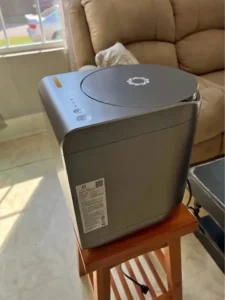
The R500 looks compact on a countertop, but picking it up tells a different story. At 16.8 pounds, the machine feels dense and planted rather than lightweight. The cast-aluminum 2.5-liter bucket adds to that solid feel, and its smooth ceramic coating gives the interior a more finished surface than a basic metal container.
Its roughly 10-inch width makes it relatively easy to fit beside a coffee maker or other countertop appliance. Height is a more important consideration, however. The machine stands about 12.5 inches tall, and you need additional room to lift and remove the lid. Under standard upper cabinets with around 18 inches of clearance, loading and unloading can feel awkward. I would rather place it on a kitchen island, an open counter, or a laundry-room worktop than squeeze it into a tight space beneath cabinets.
The R500 is manageable once it has a permanent place, but I would not treat it like a small appliance that you move in and out of storage after every cycle. Its weight and lid clearance make a dedicated spot more practical.
What Using the R500 Actually Feels Like
The R500 is designed to handle ordinary food scraps through a heated drying and grinding process. I found that it works best when I load it with a reasonably varied mixture of everyday leftovers rather than treating it like a bin for every type of kitchen waste. Apple cores, vegetable trimmings, coffee grounds, and lettuce scraps are more straightforward than large quantities of sticky or water-heavy food.
During operation, the sound changes depending on what is happening inside. The drying stage produces a steady hum that reminds me of a dishwasher running in another room. When the grinding stage starts, the sound becomes a more noticeable, muffled crunch-and-whir. It is not unbearable, but in an open-plan kitchen or studio apartment, I would be aware of it. Behind a closed door, it is much less intrusive.
The R500 is not a machine I would run right next to the dining table while everyone is talking. I prefer starting a cycle when the kitchen is not being used heavily, especially if the living and cooking areas share one open space.
Airthereal R500 Test Results: Waste Reduction, Noise, Energy, and Cycle Time
The Airthereal Revive R500 is designed to reduce the volume of kitchen scraps by drying and grinding them rather than turning them directly into finished compost. Its results depend heavily on how much food goes into the bucket and how much moisture that food contains. A small batch of vegetable scraps behaves very differently from a nearly full load of watermelon rinds, tomatoes, and other water-heavy leftovers.
How Much Does the R500 Reduce Food Waste?
Airthereal’s documentation indicates that the R500 can reduce food-scrap volume by approximately 80–90%, depending on the moisture content of the original material. The following examples illustrate what that reduction can look like with different bucket loads.
| Example load | Before processing | Approximate output | Estimated reduction |
|---|---|---|---|
| Small batch of mixed vegetable scraps | 0.5 L / 350–400 g | 0.05–0.1 L / 60–80 g | Around 80% by weight |
| Nearly full batch of mixed kitchen scraps | 2.0 L / 1.2–1.5 kg | 0.2–0.4 L / 200–280 g | Around 80–85% by weight |
These are illustrative load estimates, not guaranteed results for every cycle. Watery scraps generally lose more weight during drying, while drier ingredients may produce a different final volume and weight. The main practical benefit is that the R500 leaves behind a much smaller amount of dry material that is easier to handle and store than wet kitchen waste.
How Loud Is the Airthereal R500?
Airthereal specifies a maximum noise level below 60 dB. Noise also changes throughout the cycle, so the machine does not sound equally loud from start to finish.
| Operating stage | Approximate noise level | What it sounds like |
|---|---|---|
| Drying | 42–48 dB | A quiet refrigerator or ventilation fan |
| Grinding | 52–58 dB | A noticeable mechanical hum and grinding sound |
| Hard or fibrous scraps | Brief peaks near 58–60 dB | Occasional rattling or clicking |
The drying and cooling stages are generally less intrusive than grinding. During grinding, harder ingredients such as thick eggshells, fibrous stems, or other tough scraps can create brief increases in noise. These stage-by-stage figures should be treated as reported operating estimates rather than standardized laboratory measurements, since results can vary with the load, room acoustics, and measurement distance.
Electricity Consumption and Cost Per Cycle
The R500 has a maximum rated power of 500W, but electricity use depends on the amount and moisture content of the food being processed. The estimated consumption below provides a more useful picture of running costs than the maximum wattage alone.
| Load size | Approximate electricity use | Cost at $0.13–$0.16/kWh | Cost for 10 cycles/month |
|---|---|---|---|
| Small batch (0.5 L) | 0.25 kWh | $0.03–$0.04 | $0.33–$0.40 |
| Medium batch (1.0–1.5 L) | 0.50–0.80 kWh | $0.07–$0.13 | $0.65–$1.28 |
| Nearly full batch (2.0 L) | 1.60 kWh | $0.21–$0.26 | $2.08–$2.56 |
For a typical U.S. electricity rate of $0.13–$0.16 per kWh, even a nearly full cycle costs only about 21–26 cents to run. Smaller batches use less electricity, although running several small cycles instead of combining scraps into one suitable load may be less efficient.
The carbon filter is a separate ongoing expense. Under normal use, the supplied filter is expected to last approximately six months, but strong-smelling ingredients and frequent operation can affect its useful life. Check the filter periodically and follow Airthereal’s replacement instructions.
How Long Does an R500 Cycle Take?
A full R500 cycle can take approximately 2–7 hours, with around four hours being a common reference point. The machine moves through three stages: drying, grinding, and cooling. Drying typically takes 30–70 minutes, grinding can continue for up to 5.5 hours depending on the load, and cooling takes roughly 10 minutes before the lid can be opened.
| Type of food load | Approximate cycle time |
|---|---|
| Small, relatively dry scraps (0.5 L) | 2–2.5 hours |
| Mixed kitchen scraps (1.2–1.5 L) | 3.5–4.5 hours |
| Large, moisture-heavy load (around 2.0 L) | 5.5–7 hours |
These times are practical estimates rather than fixed presets. A load containing coffee grounds, eggshells, and relatively dry vegetable scraps may finish sooner than one packed with watermelon, tomatoes, or other high-moisture ingredients. The R500 uses its processing cycle to determine when the material is sufficiently dry, so the actual finish time can vary.
What These Results Mean in Everyday Use
The R500’s strongest practical advantage is the reduction in wet food waste. A nearly full 2-liter load can leave only a fraction of its original volume, while the estimated electricity cost remains relatively low. The trade-off is processing time: a wet, nearly full bucket may occupy several hours, and the grinding stage is noticeably louder than drying.
For the best balance of convenience and running cost, I would combine compatible everyday scraps into a sensible batch rather than running the machine for every small handful. The R500 is most useful when you view it as a food-scrap dryer and volume reducer, not as a machine that produces finished compost.
Odor Control: Ordinary Scraps Are Easier Than Strong-Smelling Food
For everyday scraps, the carbon filter does a reasonable job of keeping odors under control. Apple cores, coffee grounds, and lettuce usually produce a faint warm, toasted-breadcrumb smell during processing rather than the sour smell associated with a container of wet food scraps left sitting for too long.
Strong-smelling ingredients are a different test. Salmon skin, garlic-heavy leftovers, and pungent takeout scraps can challenge the R500’s single carbon filter. When I processed those foods, I noticed a warm, savory smell around the exhaust area, particularly during the first hour after the cycle. The filter helps, but it does not make every odor disappear.
I would avoid loading the bucket with a large amount of fish skin, garlic, or other strongly aromatic leftovers if the machine is running in a small room. For regular fruit and vegetable scraps, odor control is more manageable. The filter should also be replaced according to the manufacturer’s maintenance instructions rather than waiting until odors become obvious.
What Comes Out: Dry Flakes, Not Finished Compost

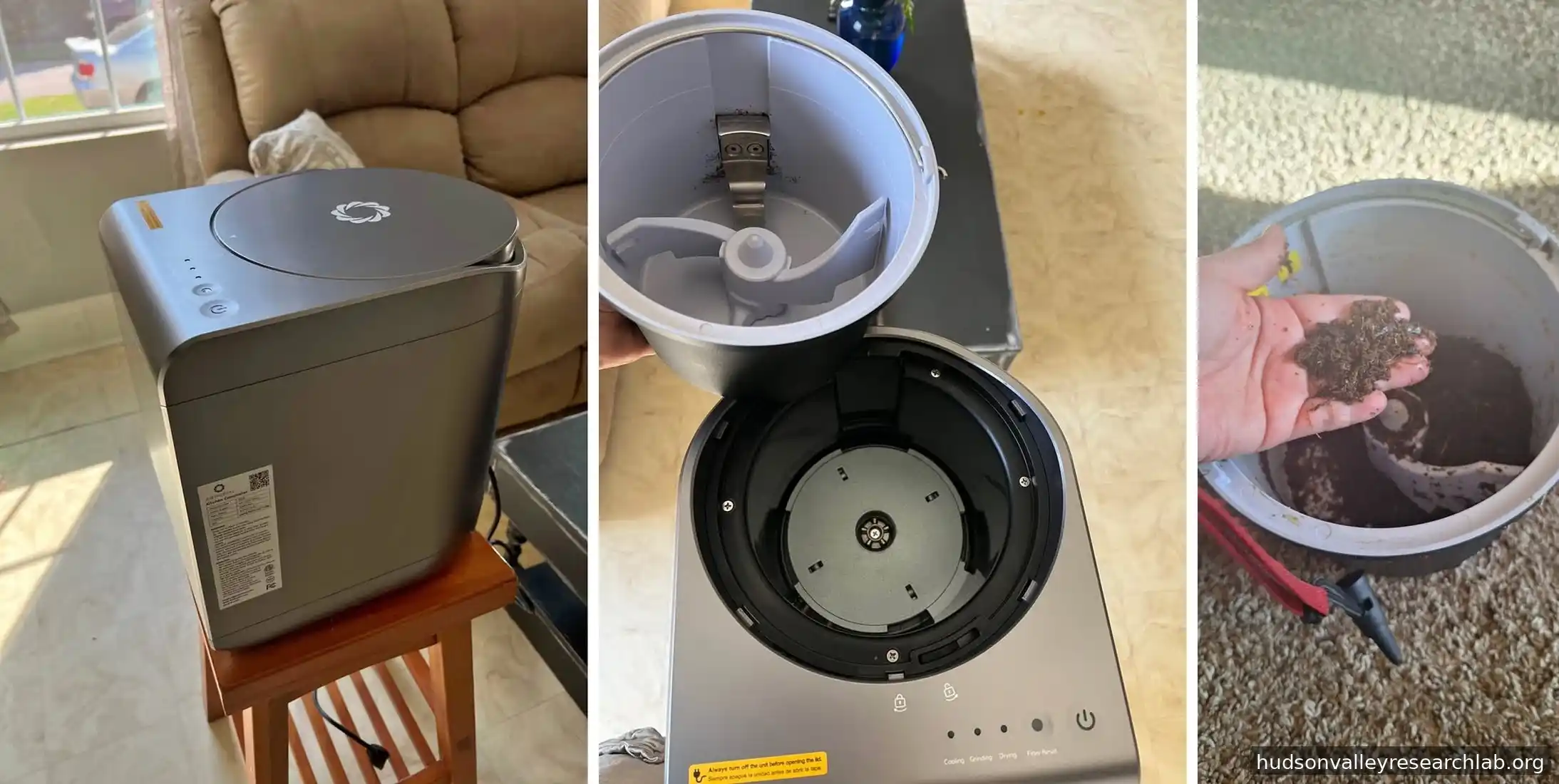
After a cycle, the processed material looks very different from the wet scraps that went in. Onion skins, spinach, tomato pieces, and coffee filters can become warm, dry, dark-brown flakes. The texture reminds me of loose-leaf black tea mixed with crushed graham crackers. The material is much lighter and less unpleasant to handle than a bucket of damp food waste.
That change is useful, but it is important to understand what the machine has produced. The R500’s output is dehydrated and ground food material, not mature compost. It has not gone through the biological decomposition and curing process needed to become finished compost, so I would not sprinkle it directly onto indoor plant pots and assume it is ready to use.
For garden use, treat the output as a pre-compost material that needs further mixing and decomposition. A conservative approach is to mix roughly one part processed material with ten parts soil or established compost, bury it a few inches deep, and allow additional time for it to break down. The exact time depends on the ingredients, moisture, temperature, and soil conditions.
Foods That Can Cause Problems
The R500 is more convenient when the food scraps are relatively easy to dry and grind. Fruit and vegetable trimmings, coffee grounds, and many ordinary leftovers are suitable examples, but very wet or sticky foods can create a mess inside the bucket.
Rice is one of the foods I would be careful with. When it dries and sticks around the center spindle, it can form a stubborn residue that takes more effort to remove than loose vegetable scraps. Watermelon and other high-moisture foods can also leave a sticky layer, especially when loaded in large quantities.
I would break up large pieces and avoid filling the bucket with a single dense mass of wet food. Mixing different types of scraps is generally easier to manage than processing a large amount of sticky rice or watery fruit by itself. If a batch leaves residue around the center mechanism, clean it before starting another cycle rather than letting the buildup accumulate.
Cleaning the Bucket and Avoiding Lid Problems
When a batch finishes cleanly, removing the dry material is usually quick. The ceramic-coated bucket is smooth, so loose flakes are easier to tip out than wet scraps from an ordinary kitchen bin. Sticky residue is a different story. Rice starch and sugary food deposits can cling around the center spindle, and a short rinse may not be enough to loosen them.
For stubborn residue, I find that soaking the bucket in warm, soapy water for about 15 minutes makes cleanup easier. Although the product listing identifies the bucket as dishwasher-safe, I prefer handwashing when food has stuck around the grinding area. It gives me more control when cleaning the center section and checking for leftover material.
The lid also needs to be aligned properly. If it resists when I try to twist it into the locked position, I do not force the handle. I lift the bucket, check for crumbs on the heating plate, and make sure the bottom drive bolt and alignment marks are positioned correctly before trying again. Forcing the lid when the parts are not aligned is more likely to create frustration than solve the problem.
Airthereal R500 vs Vitamix FoodCycler Eco 3 vs Lomi 3
The R500 competes mainly on price. The Vitamix FoodCycler Eco 3 has a larger 3.5-liter capacity, while the Lomi 3 offers a quieter published noise rating and a more premium feature set. Those differences help explain why the alternatives cost more, but they do not automatically make them better value for every household.
| Feature | Airthereal Revive R500 | Vitamix FoodCycler Eco 3 | Lomi 3 |
|---|---|---|---|
| Bucket capacity | 2.5 L | 3.5 L | 3.0 L |
| Typical price | $169–$189 | Around $399 | $299–$499 |
| MSRP | — | — | $649 |
| Published noise level | Under 60 dB | Not published | Under 45 dB |
| Main advantage | Lowest upfront cost | Larger capacity | Quieter published operation and premium features |
Prices are approximate market ranges and can change with retailer promotions. Noise figures are manufacturer-published specifications, not results from a standardized side-by-side test.
The R500’s biggest advantage is its price. At roughly $169–$189, it costs substantially less than the FoodCycler Eco 3 or Lomi 3, making it the more accessible option for buyers who mainly want to reduce wet food scraps and kitchen odors. The Eco 3 offers a larger 3.5-liter bucket, while the Lomi 3 stands out for its quieter published noise rating of under 45 dB compared with the R500’s under-60 dB rating.
The Lomi 3’s promotional price can fall between $299 and $499, although its MSRP is $649. At the lower end of that range, the price gap is smaller than it would be at full retail, but it is still more expensive than the R500. If a quieter machine matters in an open-plan home, that difference may be worthwhile. If the main goal is simply to spend less while reducing the volume of food scraps, the R500 remains the more economical choice.
Who Should Buy — and Who Should Skip the R500?
The R500 is a good fit for people who want a relatively inexpensive countertop appliance to dry and reduce everyday food scraps. It is particularly appealing if you already have an outdoor compost pile, a garden system that can accept pre-compost material, or another way to let the processed output break down further. Its 2.5-liter capacity is reasonable for routine kitchen use, provided you do not expect it to handle every scrap from a large household in one batch.
I would also consider it for someone who wants to reduce the amount of wet waste sitting in the kitchen bin. The dry output is easier to store temporarily, and ordinary fruit and vegetable scraps are less unpleasant to manage after processing. The machine is not silent, but its operating noise may be acceptable if you can run it away from the main living area.
I would skip the R500 if you expect finished compost straight from the machine, need to process large quantities of scraps at once, or are particularly sensitive to appliance noise. It is also not the best choice if you regularly process large amounts of fish, garlic-heavy leftovers, sticky rice, or very wet fruit. Buyers who prioritize quieter operation or larger capacity should compare the Lomi 3 and FoodCycler Eco 3 before making a decision.
Final Verdict: Is the Airthereal Revive R500 Still Worth Buying?
Yes. The Airthereal Revive R500 is still worth considering if your priority is an affordable way to dry and reduce kitchen food scraps. Its 2.5-liter bucket, straightforward operation, and low purchase price make it easier to justify than premium countertop food recyclers. I particularly like how ordinary scraps come out as dry, lightweight flakes instead of remaining a wet, messy mixture.
It is not a perfect appliance. Strong-smelling food can challenge the carbon filter, sticky ingredients can make cleanup harder, and the output still needs further decomposition before it should be treated as compost. The operating noise is also worth considering if your kitchen opens directly into your living space.
At around $169–$189, however, the R500 does not need to match every feature of a $400–$600 competitor to make sense. It needs to do its basic job at a reasonable price, and for households with realistic expectations, it does that well. It is not a composter, but it remains a strong budget pick for reducing everyday food waste.
Frequently Asked Questions
1. Does the Airthereal Revive R500 make real compost?
No. The R500 heats, dries, and grinds food scraps, producing a smaller amount of dry material. That output is not mature compost because it has not completed the biological decomposition and curing process. It needs further treatment before being used as finished compost in the garden.
2. How much food waste can the R500 hold?
The R500 has a 2.5-liter bucket. That is suitable for routine kitchen scraps, but the practical amount depends on the type of food being processed and how loosely or tightly it is loaded. Very wet or dense scraps can behave differently from dry vegetable trimmings.
3. Is the Airthereal R500 noisy?
Airthereal lists the R500’s noise level as under 60 dB. In use, I hear a steady drying hum followed by a more noticeable grinding sound. It is not silent, so placement matters, especially in a small apartment or open-plan kitchen.
4. Does the R500 remove food odors?
The carbon filter helps reduce odors from ordinary food scraps, but it does not eliminate every smell. Fruit and vegetable scraps are generally easier to manage than fish skin, garlic, and strongly seasoned leftovers. Those ingredients can leave a noticeable warm, savory smell around the exhaust.
5. Can I put rice in the Airthereal R500?
You can process rice, but I would use caution. Sticky rice can cling around the center spindle and leave a residue that takes more effort to clean. Avoid loading a large quantity of sticky rice by itself, and check the bucket after processing.
6. Can I put watermelon and other watery foods in the R500?
High-moisture foods can be more difficult to process cleanly and may leave sticky residue. I would break them into smaller pieces and avoid filling the bucket with a large amount of watery fruit at once. Mixing them with other suitable scraps can make the batch easier to manage.
7. Is the R500 bucket dishwasher-safe?
Airthereal’s product listing identifies the bucket as dishwasher-safe. I still prefer handwashing when food has stuck around the center spindle because soaking in warm, soapy water makes it easier to inspect and clean that area. Always follow the care instructions for your specific model.
8. How often should I replace the R500 carbon filter?
Replacement frequency depends on how often you use the machine and the types of food you process. Strong-smelling scraps can put more demand on the filter than ordinary fruit and vegetable waste. Follow Airthereal’s filter-maintenance guidance and replace it when its odor-control performance declines.
9. Can I use the R500 output directly on houseplants?
I would not use it as a direct potting-soil amendment straight from the machine. The output is dehydrated food material, not finished compost, and it needs further decomposition. Mix it with soil or established compost and allow it to break down before using it around plants.
10. What is the difference between the Airthereal R500 and V500?
The R500 and V500 share a 2.5-liter capacity and the same published external dimensions, though the V500 is slightly heavier due to its glass lid. Their lid construction is the main visible difference, so buyers should compare the current product listings for the exact version and included features.
11. Is the R500 better than the Vitamix FoodCycler Eco 3?
The R500 is the more affordable option, while the FoodCycler Eco 3 has a larger 3.5-liter capacity. If price is your main concern and 2.5 liters is enough for your household, the R500 is easier to justify. If you regularly process more scraps, the Eco 3’s larger capacity may be more convenient.
12. Is the Airthereal Revive R500 still worth buying?
Yes, if you understand what it does and want a budget-friendly way to reduce everyday food scraps. It is not a replacement for a complete composting system, and it has limitations with odors, noise, and sticky foods. But at roughly $169–$189, it offers a practical entry point for people who do not want to spend several hundred dollars on a premium food recycler.

Lead product tester and technical writer at Hudson Valley Research Lab with eight years of experience in residential organic waste management, soil health, and closed-loop gardening systems. Having evaluated countertop composters and kitchen food recyclers under real household conditions—tracking batch weight reduction, operating noise, odor control, and long-term maintenance—Julian shares practical test data and candid assessments to help homeowners build sustainable kitchen routines with confidence.