
/ 5.0
Overall Rating
•
Evaluated by Julian Vance
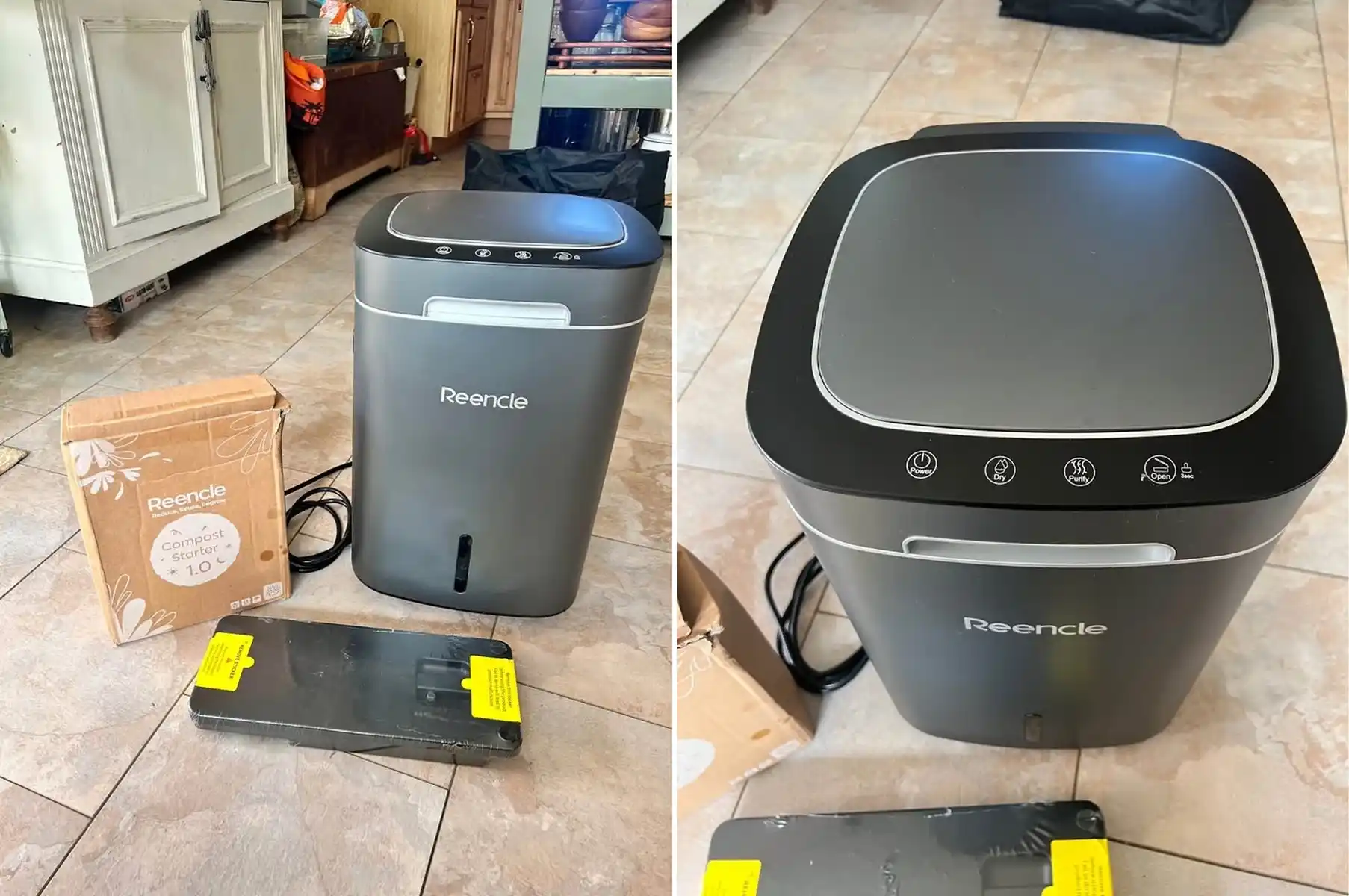
The Reencle Prime is an indoor food-waste composter designed to process everyday kitchen scraps using a living microbial culture. Unlike a traditional countertop appliance that mainly dries and grinds food, the Prime uses heat, airflow, and microorganisms to break down organic material over time.
Its 14.8 quarts chamber, continuous operation, and relatively quiet advertised noise level make it appealing to households that want to manage food scraps without maintaining an outdoor compost pile. However, it is not a set-it-and-forget-it appliance. Food balance, moisture, filter maintenance, and realistic expectations about the finished material all matter.
In this review, I look at how the Reencle Prime works, what its specifications mean in everyday use, its electricity and maintenance costs, and the limitations buyers should understand before purchasing.
Quick Verdict
The Reencle Prime is best suited to households that produce food scraps regularly, have enough space for a dedicated appliance, and prefer continuous microbial processing over a batch-style drying-and-grinding system.
Its 14.8 quarts chamber and continuous operation make it convenient to add suitable scraps throughout the day. The activated-carbon filter helps manage odors, while the microbial process breaks down organic material rather than simply removing moisture.
The main drawbacks are its approximately $549 purchase price, ongoing maintenance, and the need to manage moisture carefully. Based on the manufacturer’s average power figure and the cost of one complete replacement carbon filter, estimated running expenses are approximately $115.80 per year at an electricity rate of $0.18/kWh.
The output should not automatically be treated as finished, mature compost. Some material may need additional curing before garden use.
Bottom line: The Reencle Prime makes the most sense for people who want continuous indoor food-waste processing and are comfortable maintaining the microbial environment. It is less suitable for buyers expecting instant garden-ready compost with almost no effort.
Reencle Prime Specifications
Key manufacturer-listed specifications include:
- Processing method: Microbial decomposition
- Chamber capacity: 14.8 quarts (3.7 gallons)
- Recommended daily food input: Approximately 1.5 lbs
- Maximum daily food input: Approximately 2.2 lbs
- Operating temperature: Approximately 122–140°F
- Average power consumption: Approximately 52W
- Advertised noise level: Approximately 28 dB
- Weight: Approximately 20.1 lb
- Dimensions: Approximately 13 × 12 × 18.4 inches
- Clearance with lid open: Approximately 28.7 inches
- Power cord: Approximately 6 ft
- Carbon filter replacement interval: Approximately 9–12 months
These are product specifications and manufacturer guidance, not independent measurements. Actual electricity use, noise, processing time, and results can vary with operating conditions and the type and quantity of food added.
How the Reencle Prime Works
The Reencle Prime uses a microbial culture to help break down food waste inside its processing chamber. Rather than relying only on a blade to grind scraps into smaller pieces, it maintains an environment intended to support aerobic microbial activity.
The appliance combines several operating elements:
- Microbial activity: A starter culture provides microorganisms that help decompose organic material.
- Heat: The unit maintains a warm processing environment, with a manufacturer-listed operating range of approximately 122–140°F.
- Air circulation: Airflow supports the aerobic process and helps manage moisture.
- Mixing: The internal mixing mechanism moves the contents to help expose food scraps to the processing environment.
- Odor filtration: An activated-carbon filter helps reduce odors in the exhaust air.
The system is designed to operate continuously. You can add suitable food scraps as they are produced, provided you stay within the recommended loading guidance and avoid materials the manufacturer prohibits.
This continuous approach is different from batch-style appliances that require you to fill a chamber, select a cycle, and wait for the cycle to finish before processing another load.
Setup: Starting the Microbial Culture
The first setup step is preparing the microbial material according to the manufacturer’s instructions. The initial process involves adding water to the starter material—approximately 6–7 cups as a general setup reference—and allowing the unit to establish its operating environment.
Follow the water quantity and setup sequence in the manual supplied with your specific unit. Avoid adding extra water simply to make the contents look wetter. The goal is to establish the correct moisture condition, not to saturate the chamber.
Once the system is running, food scraps should be added gradually. Starting with manageable quantities gives the microbial culture time to adjust to the incoming material.
The Prime is intended for ongoing use, but that does not mean every type of food waste can be added without consideration. The composition and moisture level of the input affect how well the contents break down.
Capacity: How Much Food Waste Can It Handle?
Reencle lists a 14.8 quarts chamber capacity, with a recommended daily input of approximately 1.5 lbs and a maximum of approximately 2.2 lbs.
Those figures should not be interpreted as a guarantee that every household can add the maximum amount every day and get identical results. Food scraps differ considerably in water content, density, and structure.
For example:
- Vegetable trimmings can be relatively light and fibrous.
- Fruit scraps may contain substantial moisture.
- Cooked leftovers can vary in density and oil content.
- Coffee grounds can become compacted when added in large quantities.
- Watery scraps can make the chamber contents too wet if added faster than the system can manage.
A household that produces a steady amount of mixed kitchen scraps may find continuous processing convenient. A household that generates large quantities of wet waste in occasional batches may need to add it more gradually.
The practical limit is not just how much the chamber can physically hold. It is how much material the microbial system can process while maintaining suitable moisture and airflow.
Specifications vs Real-World Expectations
A useful review of a microbial food composter needs to distinguish between manufacturer specifications, calculated estimates, and measurements taken under controlled conditions.
For the Reencle Prime, the published operating specifications provide a starting point: a 14.8 quarts chamber, an average power figure of approximately 52W, a stated operating temperature of 122–140°F, and an advertised noise level of approximately 28 dB.
These figures help explain how the appliance is designed to operate, but they should not be mistaken for independent measurements. In particular, the manufacturer’s average power figure is not the same as a continuous wattmeter log, and its advertised noise level does not establish the sound level in every kitchen.
The time needed to visibly break down food depends on the ingredients, loading rate, moisture, and operating conditions. Similarly, an advertised noise figure does not necessarily represent the sound level at every distance from the appliance.
For readers evaluating real-world performance, useful evidence includes dated photographs of the chamber, records of the type and weight of food added, repeated electricity readings, and sound measurements taken at a consistent distance. Temperature readings should also identify where the probe was placed rather than presenting one reading as the temperature of the entire chamber.
This distinction is important: manufacturer specifications can describe the intended operating conditions, while repeatable measurements are needed to establish how a particular unit performs in practice.
Temperature and Electricity Consumption
The Reencle Prime is designed to maintain a warm environment that supports microbial activity. Reencle lists an operating temperature of approximately 122–140°F.
The appliance’s average power consumption is listed at approximately 52W. Using that figure, its estimated electricity use works out as follows:
- Per hour: 0.052 kWh
- Per day: Approximately 1.25 kWh
- Per 30-day month: Approximately 37.4 kWh
- Per year: Approximately 456 kWh
These are calculations based on the stated average power, not readings from a wattmeter test. Actual consumption can vary with operating conditions, ambient temperature, food moisture, and how the appliance manages its heating and processing cycle.
To estimate the cost for your household, multiply the expected monthly consumption by your electricity rate. For example, at $0.18 per kWh, 37.4 kWh would cost approximately $6.73 per month.
The important point is that the Prime runs continuously. Its electricity cost should therefore be considered as an ongoing household expense rather than a one-time cycle cost.
Noise: Is It Suitable for an Indoor Kitchen?
Reencle advertises a noise level of approximately 28 dB. That is a low figure, but it should be treated as a manufacturer specification rather than a guarantee of silent operation.
The sound a person hears can depend on the room, the distance from the appliance, background noise, and whether the internal mixing and airflow systems are operating.
A meaningful independent comparison would require a sound-level meter, a fixed measurement distance, and consistent room conditions. Without those controlled readings, it would be misleading to claim that the Reencle Prime produces exactly 28 dB in an ordinary kitchen.
If you are particularly sensitive to appliance noise, consider where the unit will sit in relation to your dining area, bedroom, or other quiet spaces.
Moisture Management: The Detail That Matters
Moisture is one of the most important factors in keeping a microbial composter operating properly.
Food scraps naturally contain different amounts of water. A large quantity of wet material—such as watermelon rind or other juicy fruit scraps—can make the chamber contents overly damp. When the material becomes too wet, it may clump together and become harder for the system to mix and process consistently.
Very dry contents can also create an imbalance. The goal is a suitable moisture level that allows the microbial material to remain active without becoming waterlogged.
A practical approach is to:
- Add wet scraps in moderate quantities rather than loading a large amount at once.
- Avoid pouring liquids into the chamber.
- Break down bulky scraps into smaller pieces when appropriate.
- Watch for changes in texture and signs that the contents are becoming excessively wet.
- Use the appliance’s Dry function when needed, following the manual.
- Reduce or pause new additions if the chamber needs time to recover its moisture balance.
What should the material look and smell like?
Moisture problems are easier to recognize when you pay attention to the condition of the material rather than relying on a fixed moisture percentage. Reencle does not specify a universal target moisture percentage for everyday operation, and the machine does not provide an electronic internal moisture-percentage reading for users to monitor.
As practical reference points, a balanced microbial bed should not look like a pool of liquid or behave like wet sludge. Material that remains loose enough to mix is generally more reassuring than contents that have become heavily compacted and sticky.
Some composting materials can have a mild earthy, fermented, or yeast-like smell. However, smell alone is not a reliable pass-or-fail test. A persistent sharp sour or rotten odor, particularly when accompanied by excessively wet and sticky contents, deserves attention.
For example, a loose texture somewhat like damp coffee grounds is a more useful visual reference than a muddy, paste-like mass. A mild earthy or bread-yeast-like smell may be less concerning than a strong sour, putrid odor. These are practical sensory comparisons, not a verified day-three test result or a guaranteed description of every healthy Reencle chamber.
If the material becomes excessively wet, use the Dry function and temporarily reduce or pause food additions according to the manual. Do not keep adding water simply because the surface looks dry.
Do not treat every change in texture as a problem. The important signs are persistent excess moisture, poor mixing, or a noticeable deterioration in processing conditions.
Odor Control and Fruit Flies: Will Your Kitchen Smell?
Odor is one of the biggest concerns with an indoor food-waste appliance. The Reencle Prime uses an activated-carbon filter to help reduce smells from the air leaving the unit. Its lid and enclosure also help contain the contents during normal operation.
However, no carbon filter should be treated as a guarantee that the appliance will be completely odor-free under every condition.
Odors can become more noticeable when the chamber contains too much wet food, when unsuitable materials are added, or when the filter needs attention. A persistent sour or stale smell near the lower rear exhaust area may indicate that the carbon filter needs to be checked or replaced.
Fruit flies are another concern for households storing food scraps indoors. Keeping the lid closed, cleaning food residue from the rim and surrounding surfaces, and avoiding prolonged exposure of scraps can help reduce the opportunity for insects to gather.
The appliance’s enclosed design and filtration system can help with odor management, but they should not be described as an absolute insect-proof barrier. Good loading habits and routine cleaning remain important.
What Comes Out: Is It Finished Compost?
The material produced by the Reencle Prime should not automatically be treated as mature, finished compost.
The appliance processes food waste and reduces its volume, but that does not mean every output is fully stabilized or ready to use directly around plants. The maturity of the material depends on the input, processing conditions, and what happens after it leaves the machine.
For gardening, it is important to distinguish between processed food-waste material and finished compost. Material that still contains recognizable food particles or has not stabilized may need additional curing before use.
A practical approach is to mix the processed material with soil or suitable composting material, keep it slightly moist and ventilated, and allow additional time for stabilization. A ratio such as one part Reencle output to four parts soil or suitable composting material can be used as a starting point for a small trial, not as a manufacturer-certified formula or a guaranteed curing recipe.
Check the material before using it. If it still smells strongly sour, contains recognizable food scraps, or appears unstable, give it more time rather than applying it directly to sensitive plants.
The Reencle Prime is therefore better understood as a food-waste processing system that can contribute material to a composting routine—not a machine that guarantees finished garden compost in 24 hours.
Reencle Prime vs Mill vs Lomi Bloom
The Reencle Prime, Mill, and Lomi Bloom all help households manage food scraps indoors, but they use different approaches and have different operating patterns. Their outputs and energy-use figures should not be treated as directly interchangeable.
| Feature | Reencle Prime | Mill Essential / Plus | Lomi Bloom |
|---|---|---|---|
| Main process | Continuous aerobic microbial decomposition | Drying and mechanical processing | Heating, mixing, and drying |
| Processing style | Continuous, 24/7 | Batch processing | Batch processing |
| Chamber capacity | 14.8 quarts | 6.9 quarts | 3 quarts |
| Food input | Recommended 1.5 lbs/day; maximum 2.2 lbs/day | Up to 10 lb of new wet scraps per cycle, according to Mill | Depends on selected mode and material |
| Processing time | Continuous operation | Runs a processing cycle | Eco-Express: 3–5 hours; Lomi Approved: 5–8 hours; Grow: 16–20 hours |
| Main mechanism | Microorganisms and slow stirring paddles | Stainless-steel auger and drying system | Heating and mixing system |
| Output | Microbially processed material that may need further curing | Dry food grounds | Lomi Earth or processed material, depending on mode |
| Power information | Approximately 52W average | 120V, 4.5A electrical requirement | 500W rated input |
| Energy information | Approximately 1.25 kWh/day at a continuous 52W average | Varies with operating frequency and household inputs | Approximately 0.6 kWh per Eco-Express cycle, 0.75 kWh per Lomi Approved cycle, and 1 kWh per Grow cycle |
| Noise information | Approximately 28 dB, manufacturer-stated | Varies with operating conditions | Less than 60 dB, according to the Bloom manual |
| Placement | Usually floor-standing | Floor-standing | Countertop |
| Weight | Approximately 20.1 lb | Essential: 45 lb; Plus: 56 lb | Approximately 22 lb |
Reencle Prime: Best for continuous microbial processing
The Reencle Prime uses continuous microbial processing. Its 14.8 quarts chamber is designed for regular additions of food scraps, with a recommended daily input of approximately 1.5 lbs.
Its main appeal is the ability to keep processing food waste without waiting for a separate batch cycle. The trade-offs are the need to manage moisture, maintain the microbial environment, and replace the carbon filter periodically.
Mill: Best for a larger batch-oriented system
Mill uses a different approach, drying and processing food scraps in a larger floor-standing appliance. Its bucket capacity is approximately 6.9 quarts, and the company describes a capacity of up to 10 lb of new food scraps per cycle.
The Mill Essential weighs approximately 45 lb, while the Mill Plus weighs approximately 56 lb. Both are substantially heavier than a typical countertop appliance.
Mill may suit households that prefer a batch-oriented system and have floor space available. It is not the same type of microbial processing system as Reencle, so the output and operating routine should not be treated as directly interchangeable.
Lomi Bloom: Best for countertop batch processing
Lomi Bloom is a countertop appliance with an approximately 3 quarts chamber and a listed weight of around 22 lb. Its listed power rating is approximately 500W.
Its operating modes are designed for different processing goals:
- Eco-Express: Approximately 3–5 hours.
- Lomi Approved: Approximately 5–8 hours.
- Grow: Approximately 16–20 hours.
The estimated electricity use associated with these modes is approximately 0.6 kWh for Eco-Express, 0.75 kWh for Lomi Approved, and around 1 kWh for Grow. Actual use can vary with operating conditions.
Like other food-waste processors, Lomi Bloom’s output should not automatically be assumed to be mature compost simply because a cycle has finished.
Which System Makes More Sense?
The Reencle Prime is the more natural fit for people who want continuous microbial processing and produce food scraps regularly.
Mill may appeal to households that prefer a larger floor-standing batch system. Lomi Bloom may be more suitable for buyers who want a smaller countertop appliance with selectable processing modes.
The best choice depends on the amount of food waste you generate, the space available, your preferred operating routine, and what you plan to do with the processed material.
Kitchen Placement: Check the Clearance Before Buying
The Reencle Prime measures approximately 18.4 inches tall with the lid closed. When the lid is open, it requires approximately 28.7 inches of vertical clearance.
This matters in many U.S. kitchens, where the space between the countertop and upper cabinets is often around 18 inches. The Prime may be too tall for some standard countertop locations, even before allowing room to open the lid.
Measure the intended location rather than relying on the appliance’s footprint alone. Leave enough room to open the lid fully, add scraps comfortably, and access the unit for cleaning and maintenance.
A kitchen island, an open counter, or a suitable floor-level location may be more practical than placing it directly beneath low upper cabinets.
Maintenance: What Owners Need to Do
The Reencle Prime requires routine attention even though it is designed for continuous operation.
Important maintenance tasks include:
- Carbon filter: Check the filter condition and replace it at the recommended interval.
- Mesh filter: Keep the mesh filter clean according to the manufacturer’s instructions.
- Chamber: Avoid allowing food residue to build up around the rim or other accessible surfaces.
- Moisture: Watch for overly wet or dry contents and use the Dry function when appropriate.
- Loading: Follow the manufacturer’s guidance on acceptable food scraps and daily input.
The carbon filter is particularly important because it helps control exhaust odors. Replacing it when needed is part of normal ownership, not an optional upgrade.
Warranty and Customer Support: What U.S. Buyers Should Know
Reencle’s U.S. warranty depends on the purchase date. Prime units purchased on or after May 1, 2026, are covered for two years from the purchase date. Units purchased before that date receive a one-year warranty.
Coverage applies to defects in materials, parts, or workmanship under normal use. Depending on the issue, Reencle may provide replacement parts for a customer-performed repair or arrange a replacement unit. Filters and other consumable items are generally excluded from standard warranty coverage.
A warranty claim may require proof of purchase, the unit’s serial-number label, and photos or videos showing the problem. Reencle states that claim processing typically takes 5–10 business days, excluding shipping time.
There is another limitation worth considering: warranty service may be restricted to the country where the product was originally purchased. Buyers importing a unit or moving it to another country should check the applicable terms before relying on U.S. warranty coverage.
For U.S. customers, Reencle provides support through email and an online contact form. The company does not currently offer phone or text support. That may be less convenient for buyers who prefer to speak directly with a technician when troubleshooting an appliance.
Ongoing Costs: Electricity and Carbon Filters
The purchase price is only part of the cost of owning the Reencle Prime. Because it operates continuously and uses a replaceable carbon filter, owners should account for both electricity and maintenance.
Electricity
Based on the manufacturer’s average power figure of approximately 52W, estimated electricity use is about 37.4 kWh per 30-day month.
At an electricity rate of $0.18 per kWh, that works out to approximately $6.73 per month, or about $80.80 per year.
Your actual cost will depend on your local electricity rate and the appliance’s real operating consumption.
Carbon Filter
Reencle recommends replacing the carbon filter approximately every 9–12 months.
At the time of writing, the official U.S. store lists a complete Prime replacement filter for approximately $35. Reencle also offers a carbon refill for approximately $30, allowing owners to reuse the existing filter housing rather than replace the entire assembly.
Using the complete replacement filter price, budgeting around $35 per year is a reasonable estimate if you replace it approximately once a year. Taxes and shipping may add to the final cost, and listed prices can change.
Estimated Annual Running Cost
Using the assumptions above:
- Electricity: Approximately $80.80 per year at $0.18/kWh.
- One complete carbon filter: Approximately $35 per year.
- Estimated total: Approximately $115.80 per year, before tax, shipping, and any additional maintenance.
This is an estimate, not a fixed ownership cost. Households with different electricity rates or filter replacement schedules will pay different amounts.
Who Should Buy the Reencle Prime?
The Reencle Prime may be a good fit if you:
- Produce food scraps regularly throughout the week.
- Want an indoor appliance that processes scraps continuously.
- Have enough counter or floor space for the unit and its open-lid clearance.
- Are comfortable managing moisture and following loading guidance.
- Understand that the output may need additional curing before garden use.
- Are willing to budget for electricity and periodic carbon-filter replacement.
It may be a poor fit if you:
- Expect every type of food waste to be accepted.
- Want finished, garden-ready compost immediately after processing.
- Have very limited kitchen space.
- Prefer an appliance that requires almost no ongoing attention.
- Do not want recurring filter or electricity costs.
Frequently Asked Questions
Does the Reencle Prime make finished compost in 24 hours?
Not necessarily. The Prime processes food waste using microbial activity, heat, and airflow, but the resulting material should not automatically be considered mature compost. Depending on its condition and intended use, additional curing may be appropriate.
Can I put chicken bones or other bones in the Reencle Prime?
No. The Reencle Prime manual lists bones among the materials that should not be added. Do not put chicken bones or other bones into the chamber.
Can I put compostable bags or biodegradable containers inside?
Do not assume that a product labeled compostable or biodegradable is suitable for the Reencle Prime. The manual lists biodegradable containers and flatware among prohibited materials. Follow the appliance’s approved-input guidance rather than relying on a general compostable label.
What happens if the power goes out?
The appliance will stop operating while power is unavailable. Because the system relies on a maintained microbial environment, avoid adding more food scraps until power is restored and the unit is operating normally again. Follow Reencle’s guidance if the outage is prolonged or the chamber develops an unusual odor.
How often should I replace the carbon filter?
Reencle recommends replacing the carbon filter approximately every 9–12 months. A persistent sour or stale smell near the exhaust area may be a sign that the filter needs attention sooner.
Does the Reencle Prime need a replacement microbial starter?
The microbial material is intended to remain in the chamber during normal operation. Whether it needs replenishment depends on its condition and the manufacturer’s maintenance guidance. Follow the manual rather than adding an unapproved starter or material.
Can I put the Reencle Prime under kitchen cabinets?
Check the available vertical clearance carefully. The unit is approximately 18.4 inches tall with the lid closed and needs approximately 28.7 inches to open the lid. Many standard countertop spaces beneath upper cabinets may not provide enough room.
Does the Reencle Prime attract fruit flies?
The enclosed design and carbon filtration help manage the conditions that can cause odor and attract insects, but the appliance should not be considered completely insect-proof. Keep the lid closed, clean food residue from the rim, and avoid leaving scraps exposed.
Is the Reencle Prime expensive to run?
Its running cost includes electricity and carbon-filter replacement. Based on the listed average power of 52W, estimated consumption is approximately 37.4 kWh per month. At $0.18 per kWh, that is about $6.73 monthly, before filter costs.
Final Verdict: Is the Reencle Prime Worth It?
The Reencle Prime is worth considering if you want a continuous indoor food-waste processing system rather than another appliance that simply dries and grinds scraps in batches. Its microbial approach and ability to accept suitable food waste throughout the day make it appealing for households that cook regularly.
However, convenience comes with some responsibility. You still need to manage moisture, follow the recommended loading guidance, maintain the carbon filter, and allow for additional curing if the processed material is not fully stabilized.
I would recommend the Reencle Prime to households that produce food scraps consistently, have a suitable place for the unit, and are comfortable with routine maintenance. If you want maintenance-free operation or compost that is guaranteed to be ready for the garden immediately, I would look at other options.
Ultimately, the Prime makes the most sense when its continuous processing method solves a real food-waste problem in your kitchen. If your existing composting routine already works well, the additional convenience may not justify the purchase.