
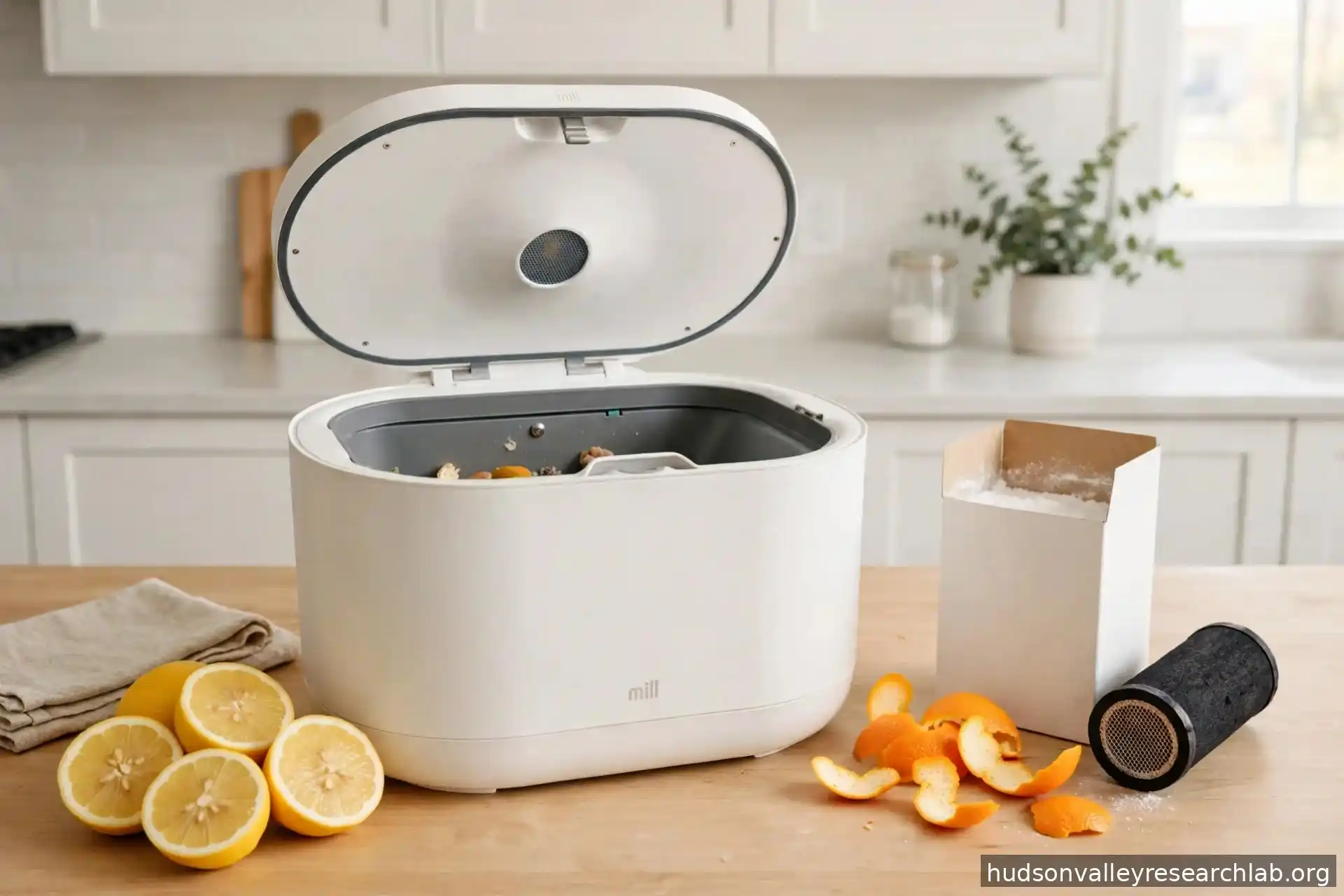
A smelly kitchen composter usually has a moisture, airflow, or material-balance problem. The fastest way to control the odor is to remove excess liquid, loosen compacted scraps, and add dry carbon-rich materials such as shredded cardboard or dry leaves. A carbon filter can help control escaping odors, but it cannot fix the underlying decomposition problem.
Before buying a new filter or replacing your compost bin, identify what is causing the smell.
How to Fix a Smelly Kitchen Composter Fast
If your kitchen composter smells unpleasant, start with these steps. They address the most common causes without requiring special cleaners or expensive accessories.
Step 1: Remove Excess Liquid
Open the container and check the bottom for accumulated liquid. Excess moisture can fill the air spaces between food scraps, reducing oxygen availability and encouraging anaerobic decomposition.
If your bin has a drainage system, empty the collected liquid according to the manufacturer’s instructions. Avoid leaving wet food scraps sitting in pooled liquid.
Step 2: Add Dry Brown Materials
Add dry, carbon-rich materials to absorb moisture and improve the balance of the mixture.
Useful options include:
- Shredded cardboard without glossy coatings
- Dry, untreated leaves
- Plain shredded paper
- Small amounts of untreated wood shavings
Mix the material into the wet scraps rather than leaving it as a thick layer on top.
Step 3: Break Up Compacted Food Scraps
Food scraps can settle and form dense, wet clumps. These compacted areas restrict airflow and create conditions that encourage unpleasant odors.
Use a suitable tool to loosen the material and separate large clumps. If your bin is designed for turning or mixing, follow its instructions.
Step 4: Check the Lid, Seals, and Drainage
Inspect the lid, rim, seals, and drainage openings. Food residue trapped around these areas can produce odors even when the main contents appear acceptable.

Clean removable parts according to the manufacturer’s instructions. Make sure drainage openings are not blocked by food particles.
Step 5: Inspect the Activated Carbon Filter
If your composter uses an activated carbon filter, check whether it needs cleaning or replacement.
Carbon filters adsorb some odor-causing compounds as air passes through them. However, their effectiveness depends on the filter design, airflow, humidity, and how much odor the material releases.
Follow the manufacturer’s replacement schedule rather than assuming every filter needs replacing after a fixed number of weeks.
Step 6: Deal With Fruit Flies
If small flies are hovering around the bin, remove exposed food residue and clean the lid, rim, and surrounding surfaces.
Check for damp scraps stuck in corners or underneath removable components. These areas can provide suitable conditions for fruit flies to lay eggs.
A clean, properly closed container and reduced moisture help prevent the problem from returning.
Why Does a Kitchen Composter Smell?
A kitchen composter can develop unpleasant odors when food scraps break down under conditions that do not support balanced decomposition. Excess moisture, limited airflow, and an unsuitable mix of food materials are common contributing factors.
The type of smell can provide a useful clue about what is happening inside the container.
Quick Smell Diagnosis: Identify the Problem and Fix It
| Type of smell | Likely cause | What to do |
|---|
These smell patterns are useful clues, not definitive diagnoses. More than one problem can occur at the same time.
Sour or Fermented Smell
A sour, acidic, or fermented smell often develops when wet food scraps break down in a poorly aerated environment.
When moisture levels become too high, air cannot move easily through the material. Microorganisms involved in anaerobic decomposition can then produce volatile fatty acids and other compounds associated with sour or rancid odors.
The practical solution is to remove excess liquid, loosen the contents, and add dry brown materials.
Strong Ammonia-Like Smell
A sharp, ammonia-like smell can indicate an imbalance involving excess nitrogen-rich material.
Food scraps such as meat and other protein-rich waste can contribute nitrogen. Coffee grounds also contain nitrogen, although they should not automatically be treated as the sole cause of ammonia odors.
Adding dry carbon-rich materials can help rebalance the mixture. Avoid adding large amounts of nitrogen-rich scraps without enough suitable brown material.
Rotten-Egg Smell
A rotten-egg smell is commonly associated with hydrogen sulfide, which can form during anaerobic decomposition.
This type of odor can occur when wet material becomes compacted and oxygen availability drops significantly. Standing liquid at the bottom of the container can make the problem worse.
Remove accumulated liquid, loosen the material, and improve airflow where the bin design allows it.
The Science Behind Composter Odors: Moisture, Oxygen, and Carbon Balance
Understanding three basic factors makes it easier to prevent odor problems instead of repeatedly treating the symptoms.
Carbon-to-Nitrogen Ratio
Microorganisms need both carbon and nitrogen to break down organic material.
- Carbon-rich materials: Dry leaves, shredded cardboard, untreated paper, and dry plant material.
- Nitrogen-rich materials: Fresh food scraps, vegetable waste, fruit waste, and other moist organic materials.
A carbon-to-nitrogen ratio of approximately 25:1 to 30:1 is commonly used as a reference for composting. It is not a requirement that every household kitchen bin must meet precisely.
For everyday use, adding dry brown materials when the contents become wet or develop a strong odor is a practical starting point.
Moisture Level
Microorganisms need moisture, but too much water can restrict oxygen movement.
A moisture range of approximately 40%–60% is often used as a practical composting reference. The ideal level varies with the materials, container design, and composting method.
If the contents look soggy, release liquid when pressed, or form dense clumps, add dry material and improve aeration.

If the mixture is excessively dry, decomposition may slow down. Add moisture gradually rather than soaking the contents.

Oxygen and Airflow
Aerobic microorganisms use oxygen during decomposition. When air cannot move through the material, anaerobic conditions can develop and produce unpleasant odors.
Turning, loosening, and avoiding excessive compaction can help maintain airflow in traditional compost bins.
Not every kitchen composter uses the same ventilation system. Follow the manufacturer’s instructions before modifying vents, seals, or drainage components.
pH and Decomposition
The pH of composting material can change as organic matter breaks down. A range around pH 6–7.5 is often cited as a useful reference for many composting processes, but it is not a universal operating requirement for every kitchen composter.
For most household users, moisture control, suitable materials, and airflow are more practical first steps than trying to adjust pH with household chemicals.
Sealed vs Ventilated Kitchen Compost Bins: Which Controls Odors Better?
A sealed kitchen compost bin and a ventilated compost container manage odors differently. Neither design is automatically better in every situation.
Sealed Kitchen Compost Bins
A sealed bin helps contain odors and prevents insects from accessing food scraps when the lid and seals fit properly.
However, sealing a container does not stop decomposition. If wet scraps remain inside for too long, unpleasant compounds can accumulate.
A sealed container may also require regular cleaning around the lid, rim, and drainage components.
Best for: Kitchens where containing odors and preventing insects from entering the container are priorities.
Ventilated Kitchen Compost Bins
Ventilated containers allow air to circulate, which can help reduce moisture buildup and support aerobic decomposition.
However, ventilation does not guarantee odor-free operation. A container with too much wet food waste or poor maintenance can still smell.
Ventilated bins may also require careful placement to avoid attracting insects or allowing odors to spread around the kitchen.
Best for: Users who want airflow and are willing to manage moisture and clean the container regularly.
Which Design Should You Choose?
Choose a sealed bin if odor containment is your main concern. Choose a ventilated design if airflow and moisture management are more important.
Regardless of the design, the condition of the contents matters more than the lid style alone.
Do Activated Carbon Filters Actually Remove Composter Odors?
Activated carbon filters can help reduce unpleasant smells, but they are not a complete solution to a poorly maintained kitchen composter.
Activated carbon has a porous structure that allows it to adsorb certain odor-causing compounds as air passes through the filter.
This can help reduce the smell escaping from a container, especially when the filter is correctly installed and air moves through it as intended.
What Activated Carbon Filters Can Do
- Adsorb some odor-causing compounds.
- Reduce the amount of smell escaping through a filter-equipped lid or ventilation system.
- Improve odor control when the container is used and maintained properly.
What Activated Carbon Filters Cannot Do
- Remove excess liquid from food scraps.
- Restore airflow inside compacted material.
- Stop decomposition.
- Prevent every odor from forming.
- Replace regular cleaning and maintenance.
When Should You Replace a Carbon Filter?
There is no universal replacement interval that applies to every kitchen composter.
Filter life depends on the amount and type of food waste, humidity, airflow, filter size, and product design.
Replace the filter according to the manufacturer’s instructions. If odors begin escaping despite proper cleaning and moisture control, inspect the filter and its housing.
A new filter may improve odor control, but it will not solve a moisture or decomposition problem inside the bin.
Should You Use Bleach or Hydrogen Peroxide to Clean a Smelly Composter?
Bleach and hydrogen peroxide can be useful disinfecting or cleaning agents in certain situations, but they should not be treated as routine odor-control treatments for active compost.
The distinction between cleaning an empty container and treating active compost is important.
Cleaning an Empty Kitchen Composter
If the container is empty, clean it according to the manufacturer’s instructions.
For routine cleaning, warm water and an appropriate dish soap are often sufficient for removing food residue. Rinse thoroughly and allow removable components to dry before reassembling.
If the manufacturer permits a disinfectant, follow the product’s dilution and contact-time instructions.
Never mix bleach with vinegar, ammonia, hydrogen peroxide, or other cleaning products. Dangerous chemical reactions can occur.
Why You Should Not Routinely Add Disinfectants to Active Compost
Active composting depends on microorganisms breaking down organic material.
Strong disinfectants can damage or kill microorganisms, potentially disrupting the decomposition process.
Adding bleach or hydrogen peroxide directly to active compost is therefore not a reliable way to fix the underlying cause of odor.
Instead, correct moisture, airflow, and material balance.
How to Get Rid of Fruit Flies and Their Larvae in a Kitchen Composter
Fruit flies are attracted to fermenting organic material. A kitchen composter containing wet fruit scraps, exposed food residue, or buildup around the lid can become an attractive breeding area.
Adult flies are only part of the problem. Eggs and larvae may remain in damp food residue even after the visible insects have disappeared.
Remove the Breeding Material
Start by removing old, exposed food scraps and cleaning residue from the container.
Pay particular attention to:
- The underside of the lid
- The rim and sealing surfaces
- Corners and seams
- Drainage openings
- Removable trays and components
Food residue trapped in these areas can support continued breeding.
Reduce Excess Moisture
Wet organic material creates favorable conditions for fruit flies and can contribute to odor problems.
Add dry brown materials where appropriate and avoid leaving standing liquid in the container.
Keep the Container Properly Closed
Make sure the lid fits correctly and that removable components are installed as intended.
For ventilated models, keep the designed ventilation system intact rather than blocking openings that are necessary for airflow.
Prevent Fruit Flies From Returning
Do not leave food scraps exposed for long periods. Clean spills promptly and empty or maintain the container according to its intended use.
If fruit flies continue appearing, inspect the surrounding kitchen area. Other sources, such as sink drains, recycling containers, and overripe produce, may also be contributing.
Does the 3:1 Brown-to-Green Rule Prevent Composter Odors?
The 3:1 brown-to-green ratio is a common starting point for traditional composting, but it should not be treated as a fixed rule for every kitchen composter.
In general:
- Browns are dry, carbon-rich materials such as leaves, cardboard, and shredded paper.
- Greens are nitrogen-rich materials such as fresh food scraps and other moist organic waste.
Adding more browns can help absorb moisture and improve the balance of a wet mixture.
However, the correct amount depends on the material’s moisture content, particle size, composition, and the composting system.
For a kitchen bin, use the condition of the contents as a practical guide:
- If the mixture is wet and smells sour, add dry browns.
- If the contents are compacted, loosen them to improve airflow.
- If the mixture is too dry, add moisture gradually.
- If the bin smells like rotten eggs, check for standing liquid and poor airflow.
The goal is a balanced, well-managed mixture rather than following a ratio blindly.
Traditional Compost Bins vs Electric Kitchen Composters
Traditional compost bins and electric kitchen composters handle food waste differently. The biggest distinction is that traditional composting relies on biological decomposition over time, while many electric countertop machines use heat, grinding, and dehydration to reduce food waste.
The finished material is not necessarily the same.
Traditional Compost Bins vs Electric Kitchen Composters: Comparison Table
| Comparison | Traditional Compost Bins | Electric Kitchen Composters |
|---|
Traditional Compost Bins
Traditional compost bins use microorganisms to break down organic waste over time.
A properly managed system can turn suitable organic materials into mature compost that can be used to improve soil.
The main advantages are:
- No electricity required in most systems.
- Low ongoing operating costs.
- Can produce mature compost.
- Suitable for handling larger amounts of organic waste, depending on bin capacity.
The disadvantages include:
- Decomposition takes time.
- Moisture and airflow need regular attention.
- Poorly managed material can attract insects and produce unpleasant odors.
- Some systems require turning and additional brown materials.
Traditional composting is a good option for people who have outdoor space and want to produce usable compost rather than simply reduce the volume of kitchen scraps.
Electric Kitchen Composters
Electric countertop composters are designed to process food scraps more quickly and conveniently.
Many models use a combination of heat, grinding, and dehydration. These processes reduce moisture and particle size, making the output easier to handle and store.
However, the result should not automatically be described as finished compost.
Depending on the machine and its process, the output may be dehydrated and ground food material that needs further biological decomposition before it can be treated as mature compost.
Potential advantages include:
- Faster processing cycles than traditional composting.
- Reduced food-scrap volume.
- Convenient countertop operation.
- Less time handling exposed food scraps.
Potential disadvantages include:
- Electricity consumption.
- Replacement filter costs on models that use filters.
- Regular chamber cleaning.
- Output that may require additional composting or curing.
- Limited batch capacity compared with larger outdoor systems.
Electric kitchen composters are most suitable for users who prioritize convenience and faster food-waste processing. They should not be purchased on the assumption that every machine produces ready-to-use compost.
Which Type Should You Choose?
Choose a traditional compost bin if you have enough space, want to produce mature compost, and do not mind managing moisture and airflow.
Choose an electric kitchen composter if you want a faster countertop process and are comfortable paying for electricity, maintenance, and replacement parts.
Before purchasing an electric model, check what the manufacturer says about the finished output. Processing food scraps in a few hours does not necessarily mean the machine has completed the biological composting process.
What to Look for When Buying a Kitchen Composter
If your current container repeatedly develops unpleasant odors despite proper maintenance, a different design may be worth considering.
However, do not choose a new composter based on odor-control claims alone. Check how the product handles moisture, airflow, cleaning, and ongoing maintenance.
Lid and Seal Design
A secure lid helps contain odors and prevents insects from accessing food scraps.
Check whether the lid is easy to remove and clean. Food residue trapped around seals can become a persistent source of smell.
Ventilation System
If the product uses ventilation, check how air moves through the container.
A well-designed system should support the intended decomposition or processing method without allowing excessive odors to escape.
Activated Carbon Filter
If the composter includes a carbon filter, check:
- Whether the filter is replaceable.
- How much replacement filters cost.
- How frequently the manufacturer recommends replacement.
- Whether replacement filters are readily available.
A low purchase price can become less attractive if replacement filters are expensive or difficult to find.
Drainage and Moisture Management
A drainage system can help users remove accumulated liquid, but it still requires regular maintenance.
Check whether the drainage components are accessible and easy to clean.
Cleaning and Maintenance
Look for removable components and surfaces that are easy to wipe down.
For electric machines, check whether the processing chamber, lid, and other food-contact components can be cleaned without damaging electrical parts.
Long-Term Operating Costs
For electric models, consider electricity use, replacement filters, and maintenance requirements.
For traditional bins, consider the cost and availability of suitable brown materials if you do not already have them.
The purchase price is only one part of the total cost of ownership.
Common Mistakes That Make a Kitchen Composter Smell Worse
Some odor-control habits can make the problem worse or simply hide it temporarily.
Adding More Food Scraps Without Checking Moisture
Adding more wet scraps to an already soggy container can increase moisture and reduce airflow.
Check the condition of the contents before adding another batch.
Relying Only on the Carbon Filter
A carbon filter can help adsorb odor compounds, but it cannot remove standing liquid or correct compacted material.
Fix the conditions inside the bin first.
Leaving Food Residue Around the Lid
Residue around the lid, rim, and seals can smell even when the main contents are not particularly unpleasant.
Clean these areas regularly.
Using Too Much Water During Cleaning
Rinsing a container without drying it properly can leave excess moisture behind.
After cleaning, allow removable parts to dry before putting the bin back into use.
Adding Disinfectants to Active Compost
Routine use of bleach or other strong disinfectants can interfere with the microorganisms responsible for decomposition.
Clean the empty container when necessary, but do not use disinfectants as a substitute for correcting moisture and airflow.
Assuming Dehydrated Food Waste Is Finished Compost
Electric machines can reduce food waste quickly, but dried and ground material is not automatically mature compost.
Check the manufacturer’s guidance before applying the output directly to plants or soil.
A Simple Kitchen Composter Maintenance Routine
Regular maintenance is usually easier than dealing with a severe odor problem.
After Adding Food Scraps
- Avoid adding excessive liquid.
- Add dry brown materials when the contents become too wet.
- Close the lid properly.
- Clean visible spills around the container.
During Regular Checks
- Look for standing liquid.
- Check whether food scraps have become compacted.
- Loosen the contents when the system allows it.
- Inspect the lid, rim, and drainage openings.
- Check the condition of the carbon filter if fitted.
When Emptying the Container
- Remove accumulated residue.
- Clean removable components according to the manufacturer’s instructions.
- Check for trapped food particles around seams and corners.
- Allow cleaned components to dry before reassembly.
For Electric Kitchen Composters
Follow the manufacturer’s cleaning schedule and avoid placing water or cleaning products near electrical components unless the instructions specifically permit it.
Do not assume every model uses the same filter, chamber-cleaning method, or replacement schedule.
Frequently Asked Questions
Why does my kitchen composter smell like rotten eggs?
A rotten-egg smell is commonly associated with hydrogen sulfide, which can form under anaerobic conditions. Excess moisture, standing liquid, and compacted food scraps can contribute to the problem. Remove accumulated liquid, loosen the contents, and improve airflow where possible.
Why does my compost bin smell sour?
A sour or fermented smell can develop when food scraps are too wet or poorly aerated. Add dry brown materials such as shredded cardboard or dry leaves, and loosen compacted contents.
Does baking soda stop kitchen composter odors?
Baking soda may help neutralize some odors on certain surfaces, but it does not fix excess moisture, poor airflow, or an unsuitable food-scrap mixture. Focus on correcting those underlying conditions rather than relying on odor-masking products.
How often should I replace an activated carbon filter?
Follow the manufacturer’s replacement schedule. Filter life varies with humidity, airflow, usage, and the amount of odor the filter needs to adsorb. Replace it sooner if the manufacturer recommends doing so or if odor control noticeably declines.
Can I put meat and dairy in a kitchen composter?
It depends on the type of composter and its manufacturer’s instructions. Traditional compost systems and electric countertop machines have different limitations. Do not assume that a machine can safely or effectively process every type of food waste.
Why does my electric kitchen composter still smell?
Possible causes include food residue inside the chamber, a dirty lid, a saturated or overdue filter, or material left in the machine for too long. Follow the manufacturer’s cleaning and maintenance instructions and inspect the filter if the model uses one.
Is the output from an electric kitchen composter ready to use as fertilizer?
Not necessarily. Many electric countertop machines produce dehydrated and ground food material rather than mature compost. Depending on the machine and process, the output may need further biological decomposition or curing before it can be used as finished compost.
Can I use bleach to remove the smell from my compost bin?
You may be able to use an approved disinfectant to clean an empty container if the manufacturer permits it. However, do not routinely add bleach to active compost. Never mix bleach with vinegar, ammonia, hydrogen peroxide, or other cleaning products.
How do I prevent fruit flies in my kitchen composter?
Remove exposed food residue, clean the lid and rim, manage excess moisture, and keep the container properly closed. Also inspect nearby areas such as sink drains and recycling containers because fruit flies may breed outside the composter.
Final Verdict: Fix the Cause Before Buying Another Odor-Control Product
A smelly kitchen composter usually needs better moisture management, airflow, or material balance—not simply a stronger deodorizer.
Start by removing standing liquid, loosening compacted scraps, and adding suitable dry brown materials. Clean food residue from the lid and container, then inspect the activated carbon filter if your model uses one.
If you are considering an electric kitchen composter, compare its processing method, output quality, electricity use, filter costs, and cleaning requirements. A faster processing cycle does not automatically mean the machine produces mature compost.
The most effective long-term approach is to understand how your particular composter works and maintain it according to its design.