
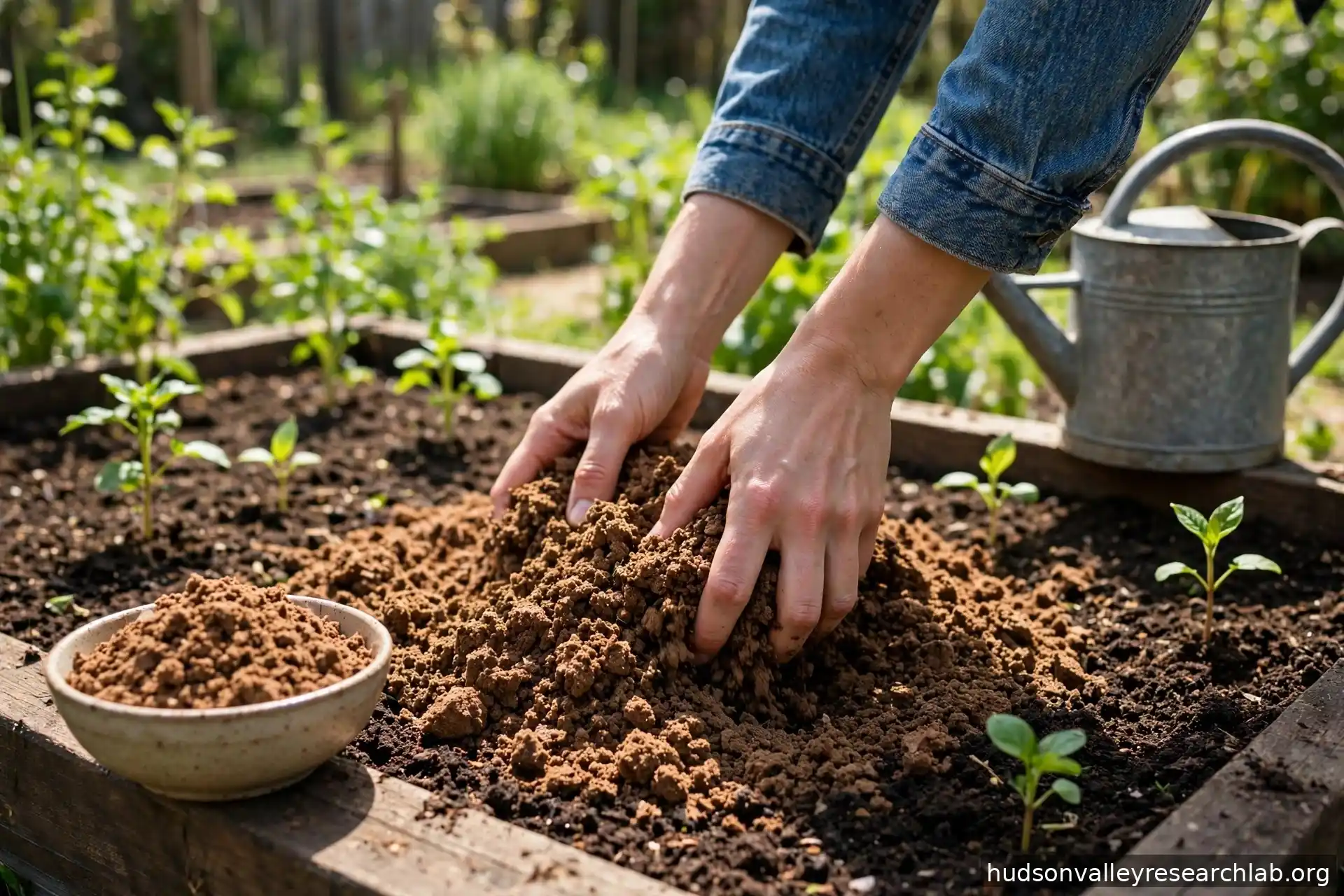
FoodCycler turns kitchen scraps into a dry, ground material called Foodilizer. You can use it as a soil amendment or add suitable batches to an outdoor compost pile, but it is not the same as finished compost. It still needs time to break down in the soil.
For most plant-based batches, a practical starting point is about one part Foodilizer to ten parts soil by volume. Mix it thoroughly rather than leaving a thick layer on the surface. Give the material time to decompose before planting directly into heavily amended soil.
The biggest mistake is treating Foodilizer like ready-to-use potting soil or fertilizer. Used carefully, it can help recycle kitchen scraps into your garden. Used too heavily, especially in containers, it can clump, develop mold, and interfere with water movement.
Quick Verdict: Is FoodCycler Foodilizer Good for Your Garden?
FoodCycler can be a useful way to reuse kitchen scraps, but its output works best as a supplementary soil amendment.
- Best use: Mix suitable plant-based Foodilizer into garden beds or add it to an outdoor compost pile.
- Starting ratio: Use approximately 1 part Foodilizer to 10 parts soil by volume for ordinary plant-based batches.
- Before planting: Allow time for the material to break down. Waiting around four weeks is a sensible target when practical.
- For container plants: Use smaller amounts and mix thoroughly. Avoid spreading a thick layer over the potting mix.
- Watch for: White fungal growth, hard surface crusts, unpleasant odors, and poor drainage when too much material is applied.
- Important safety note: Follow your specific model’s instructions for batches containing meat, fish, dairy, or other animal products. The Vitamix FoodCycler Eco 5 manual specifically warns against using animal-protein-containing output in soil.
Foodilizer is most useful when you think of it as an ingredient for building healthier soil—not a replacement for finished compost, potting mix, or balanced fertilizer.
What Is FoodCycler Waste, and Is It Actually Compost?
FoodCycler uses heat, drying, and grinding to reduce the volume of kitchen food scraps. The resulting material is commonly called Foodilizer.
The machine makes food waste easier to store and handle, but it does not complete the same biological decomposition process as a traditional compost pile. Finished compost has gone through an extended breakdown and curing process. Foodilizer is a processed food-waste material that still needs to decompose after it is incorporated into soil or added to a compost system.
FoodCycler has reported processing temperatures of up to 140°C (284°F), reductions in food-scrap volume of up to 90%, and reductions of more than 99% in certain bacteria under its stated conditions. These are manufacturer-reported performance figures, not a reason to assume every batch is sterile or ready to use as finished compost.
That distinction matters in the garden. Foodilizer can contain useful organic material and minerals, but it may also temporarily affect soil moisture, microbial activity, and nutrient availability while it breaks down.
FoodCycler Models and the Vitamix Name
FoodCycler has appeared under different brand names in the U.S., which can make model research confusing.
Food Cycle Science is the original Canadian company behind the FoodCycler technology. Vitamix previously distributed models such as the FC-50 and Eco 5 under the Vitamix FoodCycler name. Food Cycle Science also sells FoodCycler models directly under the FoodCycler brand.
Here are the main models and their bucket capacities:
| Model | Brand or listing name | Bucket capacity |
|---|---|---|
| FC-50 | Vitamix FoodCycler FC-50 | 2.5 L |
| FC-30 | FoodCycler FC-30 | 2.5 L |
| Eco 3 | FoodCycler Eco 3 | 3.5 L |
| Eco 5 | Vitamix FoodCycler Eco 5 or FoodCycler Eco 5 | 5 L |
| Maestro | FoodCycler Maestro | 5 L |
The Eco 5 is not necessarily a different machine just because a listing says FoodCycler instead of Vitamix FoodCycler. When shopping, compare the model number, bucket capacity, included accessories, seller, and warranty terms.
The capacity difference is worth noting: the older FC-30 has a 2.5-liter bucket, while the current Eco 3 has a 3.5-liter bucket. The Maestro and Eco 5 both have 5-liter capacities, although they are different model generations.
If you’re searching on Amazon, try both “FoodCycler Eco 5” and “Vitamix FoodCycler Eco 5.” Also check who is actually selling the unit. Warranty support can depend on the product and seller, especially with older Vitamix-branded models.
What Does Foodilizer Actually Smell and Feel Like?
FoodCycler output does not look or smell exactly like finished backyard compost. Instead of moist, dark, earthy material, the machine produces a dry, ground food-waste product.
Based on reports from FoodCycler owners, the finished material can resemble dry coffee grounds, fine sawdust, or crushed breadcrumbs. Its color and texture depend on the ingredients. A batch made mostly from vegetable scraps and coffee grounds may look different from one containing eggshells or harder food scraps.
Does FoodCycler Output Smell?
The smell varies with the ingredients.
Batches containing vegetables, fruit peels, and coffee grounds often leave a mild roasted or dried-food scent. Some users compare it to roasted coffee, dried tea, or toasted bread.
However, not every cycle is completely odor-free. Cabbage, broccoli, onions, garlic, and citrus peels can produce stronger smells while the machine is heating. The activated-carbon filter helps manage odors, but it cannot guarantee that no smell will escape.
If strong food odors bother you, a laundry room, utility room, or garage may be a better location than an open kitchen counter.
Batches containing meat, fish, or dairy can also retain a mild cooked-food smell after processing. Keep finished material in a tightly sealed container, and check your model’s instructions before using any batch containing animal products in the garden.
The smell during a cycle and the smell of the cooled output are not necessarily the same. A batch that produces a noticeable odor while heating may smell much milder after it cools and is stored properly.
Why Does Foodilizer Sometimes Become Dusty or Clumpy?
The dry output can be fine and powdery, particularly when a batch contains brittle ingredients such as eggshells. Harder scraps may also leave small particles or a coarser texture.
Ground eggshells and certain shell materials can create very fine dust when the bucket is emptied. Pour the material slowly and avoid creating a dust cloud. Let airborne particles settle before transferring the output to a storage container.
Foodilizer can also absorb moisture after processing. If it gets wet while sitting in a container or on the surface of a plant pot, particles may stick together and form dense clumps.
The Best FoodCycler Foodilizer-to-Soil Ratio
For ordinary plant-based batches, a useful starting point is approximately 1 part Foodilizer to 10 parts soil by volume.
This is a volume-based guideline, not a weight-based measurement. Foodilizer is dry and relatively light, so weighing it against soil can produce a very different mixture.
For example:
- 1 cup of Foodilizer mixed with about 10 cups of soil
- ½ gallon of Foodilizer mixed with about 5 gallons of soil
- 1 quart of Foodilizer mixed with about 10 quarts of soil
The goal is to distribute the material throughout the soil rather than create a concentrated pocket.
If you’re working with a small container, start with less. A large garden bed has much more soil to dilute and distribute the material than a balcony tomato pot.
Why Should You Wait Before Planting?
Foodilizer still needs to break down after it is added to soil. During this process, soil microorganisms use the available organic material, and the nutrient balance around the particles can temporarily change.
Waiting at least one week gives the material some time to begin integrating into the soil. When your planting schedule allows, around four weeks is a more comfortable target, especially if you have incorporated a substantial amount.
For seedlings or plants with sensitive roots, avoid putting fresh Foodilizer directly into the planting hole. Mix it into the surrounding soil in advance instead.
What About Foodilizer Made From Meat, Fish, or Dairy?
Animal-based food scraps require extra care. FoodCycler guidance can vary by model and by the type of food processed, so do not assume that every dried batch is suitable for garden soil.
Some general FoodCycler gardening guidance discusses different dilution suggestions for batches containing more animal products. However, the Vitamix FoodCycler Eco 5 instructions include a specific warning against incorporating recycled food compound containing animal protein, such as chicken bones or fish bones, into soil. You can check the Vitamix Eco 5 Owner’s Manual for the model-specific guidance.
For that reason, follow the instructions for your exact machine rather than applying a general ratio to every batch. If your manual says not to use animal-protein-containing output in soil, do not use it in your garden.
What should you do with those batches instead? Check whether your local municipal green-bin or food-scrap collection program accepts processed food waste. If it does, use that service according to its rules. If not, follow your local waste-disposal guidance. A dedicated system such as Bokashi or a Green Cone may be another option, but only if its instructions allow the specific animal-based material you’re handling.
How to Use FoodCycler Waste in Different Garden Areas
Once you have a suitable plant-based batch, there are several ways to use it.
Garden Beds
Garden beds are generally more forgiving than small containers because they contain a larger volume of soil.
Spread the appropriate amount over the area, then mix it into the upper soil layer. Avoid leaving a thick, exposed layer on top. Mixing helps distribute the particles and reduces the chance of a hard crust forming after watering.
If you’re preparing a new bed, incorporate the material before planting and allow time for it to break down.
Flower Beds
Flower beds can benefit from carefully incorporated organic amendments, but ornamental plants still need balanced growing conditions.
Mix Foodilizer into the soil around the planting area rather than piling it against stems or roots. For established flowers, use a conservative amount and avoid disturbing shallow roots.
Raised Beds
Raised beds offer more control over soil composition, but they can also dry out faster than in-ground beds.
Mix Foodilizer evenly through the soil instead of concentrating it in one corner. Keep an eye on moisture after watering, especially if the bed contains a large amount of lightweight potting mix.
Outdoor Containers
Containers need the most caution. Their limited soil volume makes it easier to overapply a concentrated amendment.
Use a small amount, mix it thoroughly, and avoid using Foodilizer as a major component of the potting mix. Do not spread a thick layer across the surface.
For indoor plants and balcony containers, a conventional potting mix and a suitable fertilizer should remain the foundation of the growing medium.
Outdoor Compost Piles
Adding suitable Foodilizer to an established outdoor compost pile is another practical option.
Mix it with dry carbon-rich materials such as leaves, shredded cardboard, or other appropriate browns. This helps balance the pile and reduces the chance of food-derived material forming dense, wet clumps.
The compost pile still needs the right moisture, airflow, and time to finish decomposing.
Why Foodilizer Can Turn Into a Hard Crust in Plant Pots
One of the more useful warnings from real-world gardening discussions concerns what happens when Foodilizer gets wet.
Unlike mature compost, Foodilizer is still a concentrated, processed food-waste material. If you spread a thick layer over the surface of a container and water it, the particles can absorb moisture, clump together, and form a dense crust.
Some container gardeners have reported material becoming moldy and hard enough to interfere with water movement and plant growth.
This is a good reason not to use Foodilizer as a thick top dressing.
To reduce the risk:
- Mix it thoroughly into the potting mix or garden soil.
- Use smaller amounts in containers than you would in a large garden bed.
- Avoid placing concentrated material directly around plant roots.
- Keep the growing medium moist but not waterlogged.
- Watch for persistent surface mold, unpleasant odors, fungus gnats, or declining plant growth.
If a hard layer develops, carefully remove the crust without damaging the roots. Stop adding Foodilizer and check the container’s drainage and moisture before applying anything else.
White Mold on FoodCycler Waste: Is It Dangerous?
White fuzzy growth can appear when Foodilizer is incorporated into moist soil. In many cases, this is saprophytic fungal growth—fungi breaking down organic material.
A small patch of white growth does not automatically mean the soil is contaminated or that the plant will die. Fungi are part of the natural decomposition process.
The important thing is to look at the surrounding conditions.
If the soil smells normal, drains properly, and the plant is growing well, a small amount of fungal growth may simply be part of decomposition.
However, take action if you notice:
- Thick or spreading mold across the soil surface
- Soil that stays wet for too long
- A sour or rotten smell
- A hard crust that prevents water from soaking in
- Fungus gnats or other signs of persistent damp organic material
- Yellowing, wilting, or declining plant growth
In those situations, stop adding Foodilizer. Remove excessive surface material if necessary, improve drainage, and let the growing medium return to a healthier moisture level.
How Deep Should You Mix Foodilizer Into Soil?
For garden beds, mix Foodilizer approximately 4–6 inches (10–15 cm) into the soil rather than leaving it exposed on top.
This is a practical gardening approach, not a special manufacturer requirement. Incorporating the material helps distribute it through the soil and reduces the chance of a concentrated surface layer becoming wet and compacted.
For containers, mix it evenly through the potting medium instead of burying a thick pocket of material near the roots.
Using FoodCycler Foodilizer Around Tomato Plants
Tomatoes are heavy feeders, so it’s understandable that gardeners look for ways to reuse kitchen scraps in tomato beds and containers.
Foodilizer can contribute organic material to the soil, but it should be treated as a supplementary amendment—not a complete tomato fertilizer.
Can Ground Eggshells Help Prevent Blossom-End Rot?
FoodCycler can grind eggshells into smaller particles than many people achieve by crushing shells by hand. This makes the material easier to distribute through soil, and eggshells contain calcium.
However, adding eggshell powder does not guarantee that tomatoes will avoid blossom-end rot.
Blossom-end rot is associated with problems in calcium delivery to developing fruit. Inconsistent watering, root stress, and other growing conditions can interfere with calcium movement within the plant. Calcium in eggshells also does not become instantly available just because the shells have been ground. The University of Minnesota Extension’s guide to tomato disorders explains the role of growing conditions in blossom-end rot.
For healthier tomato plants, focus on consistent soil moisture, good drainage, and balanced nutrition. Treat processed eggshells as a supplementary calcium-containing amendment rather than a cure for blossom-end rot.
What About Earthworms and Soil Life?
Some gardeners report that when Foodilizer is mixed into an established, moist garden bed, earthworms and other soil organisms gradually work through the organic particles.
These observations suggest that suitable Foodilizer can become part of the soil’s normal decomposition process. However, the speed depends on soil conditions, moisture, temperature, and the ingredients in the batch.
Don’t assume every batch will disappear within a week or two. Avoid leaving a thick layer of food-derived material exposed on the soil surface.
Be More Careful With Container Tomatoes
A container has much less soil volume than a garden bed, so mistakes with concentrated amendments are harder to correct.
Reports from container gardeners describe problems after adding large amounts of FoodCycler output, including mold, dense clumps, and poor plant performance.
Avoid using Foodilizer as half of a tomato potting mix. That is an excessive proportion for a material that has been dried and ground but has not finished decomposing.
Start with a small amount mixed evenly into the existing growing medium. Keep the soil well-drained and monitor the plant’s response before adding more.
Does FoodCycler Foodilizer Affect Soil Nitrogen?
One concern with adding fresh organic material to soil is temporary nitrogen immobilization.
As microorganisms break down carbon-rich material, they need nitrogen to support their activity. Depending on the composition of the batch, they may temporarily use some of the nitrogen that would otherwise be available to plants.
This does not happen to the same degree with every batch. Plant-based scraps, coffee grounds, and mixed food waste have different compositions, so there is no single carbon-to-nitrogen ratio that describes all Foodilizer.
Some estimates for particular food-scrap mixtures place plant-based material around a 31:1 carbon-to-nitrogen ratio and mixed batches around 18:1. These are illustrative estimates for specific mixtures, not guaranteed FoodCycler product specifications.
The practical takeaway is simple: do not use large quantities of fresh Foodilizer as an immediate fertilizer replacement. Mix it into soil ahead of planting and continue using a balanced fertilizer when your plants need one.
Does FoodCycler Waste Increase Soil Salt Levels?
Food scraps naturally contain minerals and salts. Because FoodCycler removes much of the water during processing, some nonvolatile minerals may become more concentrated in the remaining material.
That does not mean every batch has exactly ten times the original salt concentration. The actual concentration depends on the ingredients and how much material remains after processing.
Be especially cautious with salt-heavy leftovers, sauces, heavily seasoned foods, and processed foods. These are not ideal ingredients for garden amendments.
For sensitive plants and container gardens, use clean plant-based scraps and avoid excessive applications. If you are concerned about salt buildup, a soil test is more useful than guessing from the appearance of the Foodilizer.
Can Foodilizer Change Soil pH?
Foodilizer does not have one predictable effect on soil pH.
Its effect depends on the ingredients in the batch, the existing soil, and the amount applied. Eggshells contain calcium carbonate, while different fruit and vegetable scraps have different mineral and organic compositions.
Do not use Foodilizer as a substitute for garden lime or sulfur. If your soil is too acidic or too alkaline, test it first and use a soil amendment specifically intended to correct that condition.
For vegetable beds, a soil test can help you decide whether you need to adjust pH or simply maintain the existing soil.
How to Store FoodCycler Foodilizer
Foodilizer is easier to store than wet kitchen scraps, but moisture is still the main concern.
Allow the finished material to cool and dry before transferring it to an airtight container. A five-gallon bucket with a tight-fitting lid works well for people who process food scraps regularly.
Store the container in a cool, dry location away from rain, humidity, and direct moisture.
FoodCycler does not list an official expiration date for Foodilizer. Most gardeners aim to use stored batches within a year rather than keeping them indefinitely. Before using older material, check for dampness, unusual clumping, or an unpleasant smell.
If moisture gets into the container, the material may start to break down and develop an odor. Do not seal a warm or damp batch in an airtight bucket.
Can You Make Compost Tea From FoodCycler Waste?
You may find online recipes suggesting that Foodilizer can be soaked in water to make a liquid garden feed. Some recipes recommend placing the material in a bucket of water and aerating it for a day or two.
However, this is not a standard FoodCycler-recommended use, and there is no universal recipe that guarantees a safe or balanced liquid fertilizer.
A homemade soak can produce inconsistent results depending on the ingredients, water conditions, and storage time. If the mixture becomes foul-smelling or slimy, do not apply it to edible plants.
For most home gardeners, incorporating suitable Foodilizer into soil or adding it to an established outdoor compost pile is the more straightforward approach.
Common FoodCycler Operating Problems Gardeners Mention
FoodCycler is convenient, but the type and condition of the scraps can affect cycle time, odor, and how smoothly the machine operates.
Cut Long, Fibrous Scraps Into Smaller Pieces
Long, stringy scraps such as celery stalks, asparagus stems, corn husks, and artichoke leaves are harder for a grinding mechanism to process than small, soft pieces.
Cut fibrous scraps into shorter sections before loading the bucket. This can help reduce tangling and make processing easier.
If material appears to be jammed, do not force the bucket or blade. Follow the cleaning and blockage instructions for your exact model, and never reach into the bucket while the machine is connected to power.
Drain Very Wet Scraps Before Starting a Cycle
Watermelon rinds, juicy fruit scraps, and leftovers containing liquid can add a lot of moisture to a batch.
FoodCycler cycle times can vary, with manufacturer guidance generally describing a range of approximately 4–9 hours depending on the amount, density, and moisture level of the scraps.
Some owners report longer cycles when processing particularly wet loads. Letting excess liquid drain before loading the bucket is a simple way to avoid making the machine work through unnecessary moisture.
You can leave scraps in a draining container in the refrigerator rather than leaving wet food waste sitting out at room temperature.
Don’t treat a 4–6-hour cycle as guaranteed. A large or unusually wet batch can take longer, and actual processing time depends on the machine and the ingredients.
Expect Fine Dust From Some Hard Ingredients
Eggshells and certain shell materials can produce very fine powder after grinding.
Pour the finished material slowly and avoid creating a dust cloud when emptying the bucket. If the output is especially dusty, let it settle before transferring it to a storage container.
FoodCycler vs Traditional Composting: Which Is Better for Your Garden?
FoodCycler and traditional composting solve different problems. One reduces and dries kitchen scraps quickly; the other relies on biological decomposition to produce mature compost.
| Feature | FoodCycler | Traditional composting |
|---|---|---|
| Main process | Heating, drying, and grinding | Microbial decomposition |
| Processing time | Usually several hours per cycle | Often several months |
| Output | Dry, ground food-waste material | Decomposed organic compost |
| Ready for planting? | Needs further breakdown in soil | Finished compost can be used as a soil amendment |
| Space required | Countertop or utility-room appliance | Outdoor pile, bin, or composting area |
| Odor | Filter helps control odors, but some smells may escape | Can smell if poorly managed |
| Best fit | People who want to process kitchen scraps indoors | Gardeners who have space and time for composting |
FoodCycler is convenient if you want to reduce the volume of food scraps without maintaining an outdoor compost pile. Traditional composting is better if your main goal is to produce mature compost for garden beds.
You can also use both systems together. Suitable FoodCycler output can be added to an established outdoor compost pile, where it continues breaking down alongside other organic materials.
Frequently Asked Questions
Is FoodCycler Foodilizer safe for vegetable gardens?
Suitable plant-based Foodilizer can be incorporated into vegetable garden soil. Follow the instructions for your specific model, especially if a batch contains animal products. Mix the material into the soil rather than leaving it exposed on the surface, and allow time for it to break down before planting.
Can I use Foodilizer for leafy vegetables?
You can use suitable plant-based Foodilizer in beds intended for leafy vegetables, but avoid applying fresh material directly around edible leaves or leaving it exposed on the soil surface. Incorporate it into the soil before planting and follow normal food-garden hygiene practices.
Is Foodilizer good for fruiting plants such as tomatoes and peppers?
It can be used as a supplementary soil amendment, but it is not a complete fertilizer. Fruiting plants still need balanced nutrition, consistent moisture, and good drainage. Use smaller amounts in containers than in large garden beds.
Can FoodCycler eggshell powder prevent blossom-end rot in tomatoes?
No. Ground eggshells contain calcium, but adding them does not guarantee protection against blossom-end rot. The condition is also associated with inconsistent moisture and problems with calcium movement inside the plant. Maintain even watering and healthy root conditions.
Why is there white mold on my Foodilizer?
White fungal growth can appear while organic material decomposes in moist soil. A small patch is not automatically harmful. However, widespread mold combined with soggy soil, a rotten smell, fungus gnats, or declining plants suggests that the material may have been applied too heavily or the container is staying too wet.
Can I put Foodilizer directly on top of potting soil?
It is better to mix Foodilizer into the soil. A thick surface layer can absorb water, clump together, and form a hard crust. This is especially problematic in small containers.
Can I use FoodCycler output in indoor plant pots?
You can use suitable plant-based material cautiously, but indoor containers have limited soil volume and drainage. Use a small amount, mix it thoroughly, and monitor the plant. For many houseplants, a conventional potting mix and balanced fertilizer are easier to manage.
Does Foodilizer change soil pH?
It can influence soil conditions depending on the ingredients, but there is no universal pH effect for every batch. Test your soil before trying to correct acidity or alkalinity. Foodilizer is not a replacement for lime or sulfur.
Can I store Foodilizer for a year?
FoodCycler does not publish an official expiration date. If the output is completely dry and stored in a sealed container away from moisture, many gardeners aim to use it within a year. Check for dampness, clumping, or unusual odors before use.
Can I put meat or fish Foodilizer in my garden?
Do not assume that animal-containing batches are safe for soil. Follow your model’s instructions. The Vitamix FoodCycler Eco 5 manual specifically warns against incorporating recycled food compound containing animal protein, including chicken or fish bones, into soil.
What should I do with Foodilizer containing meat or fish?
Check whether your municipal green-bin or food-scrap collection program accepts processed food waste. If it does, follow its collection rules. Otherwise, use the disposal method recommended by your local waste authority. A dedicated Bokashi or Green Cone system may be an option only if its instructions allow the specific material.
Can I add Foodilizer to an outdoor compost pile?
Suitable plant-based Foodilizer can be added to an established compost pile. Mix it with dry carbon-rich materials such as leaves or shredded cardboard rather than dumping a thick, wet clump in one spot.
Making Foodilizer Work in Your Garden
FoodCycler gives kitchen scraps another use, but the finished material is best viewed as a soil amendment that still needs to break down.
For most gardeners, the safest approach is to start with suitable plant-based batches, use modest amounts, mix them into the soil, and pay attention to moisture. Avoid thick surface applications in containers, and follow the model-specific instructions for any batch containing animal products.
Used thoughtfully, Foodilizer can be a convenient part of a home food-waste recycling routine and a useful addition to a garden’s soil-building process.

Lead technical researcher at Hudson Valley Research Lab specializing in closed-loop home ecosystems and decentralized organics recovery. Having stress-tested dozens of countertop composters, nutrient probes, and microclimate controllers against dense food waste and erratic humidity, Julian shares empirical bench data and candid teardowns to help homeowners build resilient, sustainable setups with confidence.